ABSTRACT
Commercial air-conditioning systems are widely used for buildings of various sizes. Design and installation of these systems follow a certain guideline developed by the manufacturer. The guideline also includes the adequate amount of refrigerant to be charged into the system. However, the guideline is often insufficient to reflect all the characteristics of installation, which results in too little or too much refrigerant. Inadequate amount of refrigerant usually causes more power consumption and reduced air-conditioning / heating capacity. This paper focuses on identifying the relationship between adequate refrigerant amount and various state variables such as condensation temperature of the air-conditioning system. This is based on regression analysis of data obtained through the experiments under controlled temperature and humidity.
-
KEYWORDS: Diagnosis, Fault detection, Air-conditioning, Variable refrigerant flow
-
KEYWORDS: 진단, 고장감지, 에어컨, 냉매량 가변
NOMENCLATURE
Electronic expansion valve
The degree of superheat of subcooler
Seasonal energy efficiency ratio
The degree of superheat of suction pipe
1. 서론
상업용 시스템 에어컨은
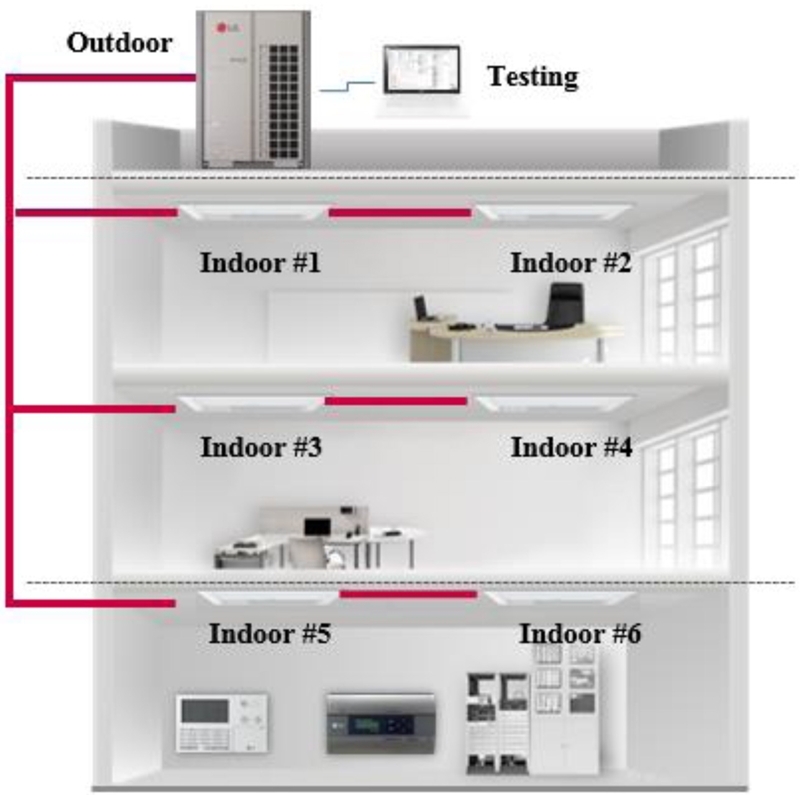
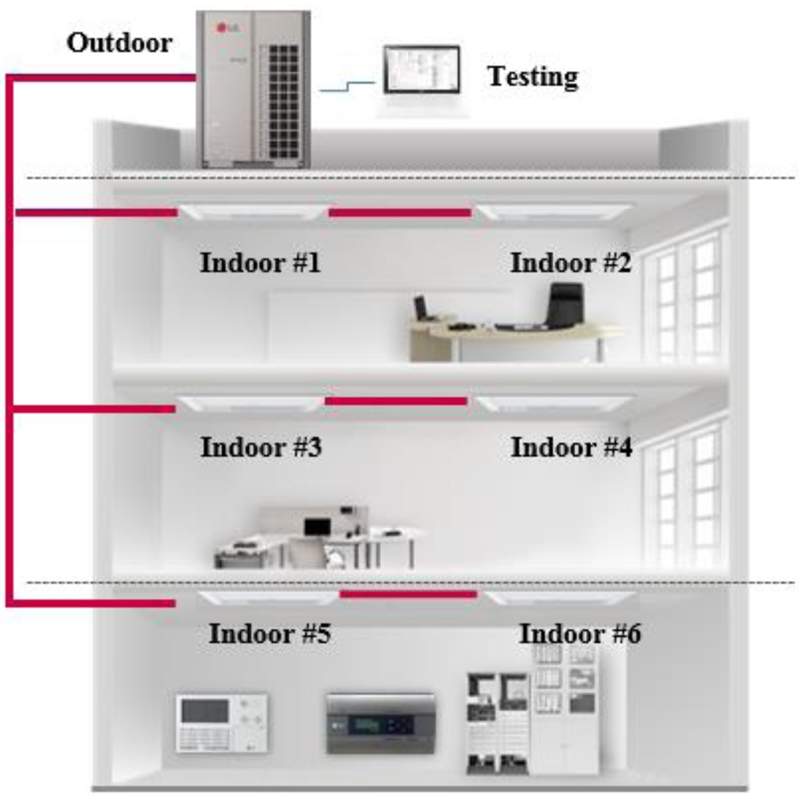
Fig. 1에 보인 것 같이 실외기에서 하나의 연결 배관이 나와서 여러 대의 실내기를 BUS 방식으로 연결한다. 실외기는 압축기를 이용하여 에어컨의 냉매를 실내기로 전달하여 연결된 실내기에서 나오는 냉기를 일정하게 유지하는 역할을 한다. 상업용 에어컨은 일반 주거용 에어컨과 달리 실외기와 실내기 사이의 배관이 길어서 최대 100 m에 달하기도 하며 건물에 따라 차이가 큰 경우가 많다. 상업용 에어컨은 긴배관에 따른 압력 손실을 보상하기 위해서 냉매를 충분히 충전하고 각 제어기를 통한 제어로 일정한 압력을 유지하는 것이 필요하다.
Fig. 1 Example of commercial air-conditioning system
하지만 총 배관길이에 따라 충전해야 할 냉매의 양이 다르기 때문에 설치자가 적절한 양을 충전하지 못하는 경우가 있다. 부적절한 냉매의 양은 봄, 가을에는 별다른 영향을 미치지 않지만, 여름 또는 겨울에는 냉방 또는 난방이 충분하게 이루어지지 않는 결과를 낳는다. 이러한 미흡한 성능은 고객의 수리요청으로 이어지고 이는 제조사의 품질비용으로 전가된다. 또한 제조사의 평판에도 악영향을 미치게 된다. 이를 최소화하기 위하여 적절한 냉매의 양을 결정하는 절차가 확립되어 있지만 여러 요인 때문에 그 실효성이 부족한 상태이다. 이 논문에서는 설치상황에 따라 적절한 냉매의 양을 계산하는 방법을 제시하고 있으며 항온항습 상태가 유지되는 실험 체임버에서 냉매 양을 변화시키면서 얻은 시스템의 상태 변수들을 이용하여 회귀분석을 수행하였고, 현장에서 측정한 결과를 기초로 회귀분석 결과를 평가하고 개선하였다.
2. 상업용 시스템 에어컨의 적정 냉매량
상업용 냉난방 시스템의 고장 감지 및 진단에서 냉매 충전량의 결함을 찾는 것이 큰 비중을 차지하고 있으며 충전된 냉매의 양이 부적절한 경우 시스템 성능에 심각한 부정적인 영향을 미치는 것으로 보고되었다.
1-
2 만약 냉매가 정량 대비 25% 감소를 하게 되면 SEER는 16% 감소하는 것으로 알려져 있다.
3 특히 이러한 문제가 전력 소비가 늘게 하고 온실 가스 배출을 높여 지구 온난화에 직간접적으로 기여한다.
4 그러므로 에어컨의 냉매 충전량은 시스템 성능에 영향을 미치는 중요한 변수이다.
5
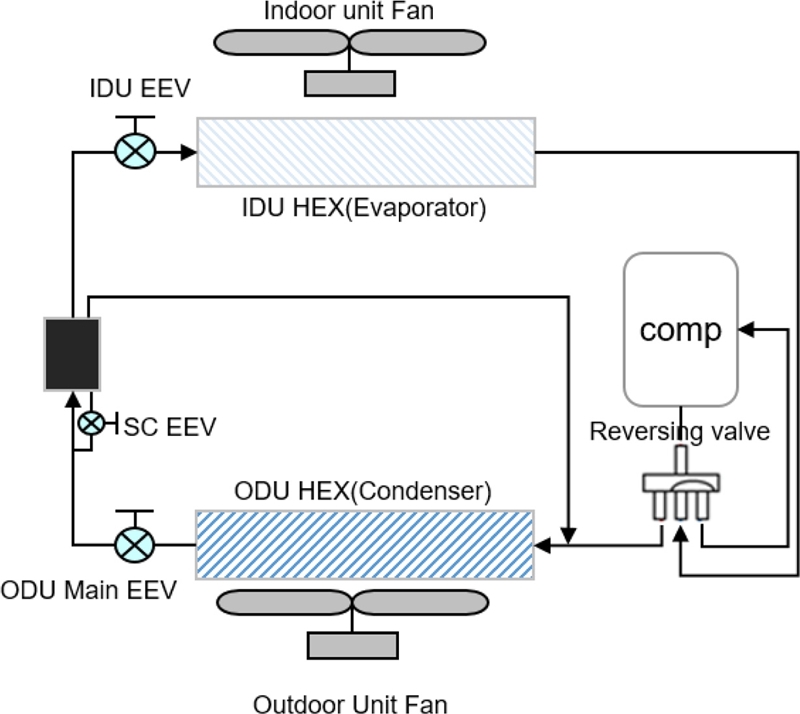
Fig. 2Configuration of air-conditioning system
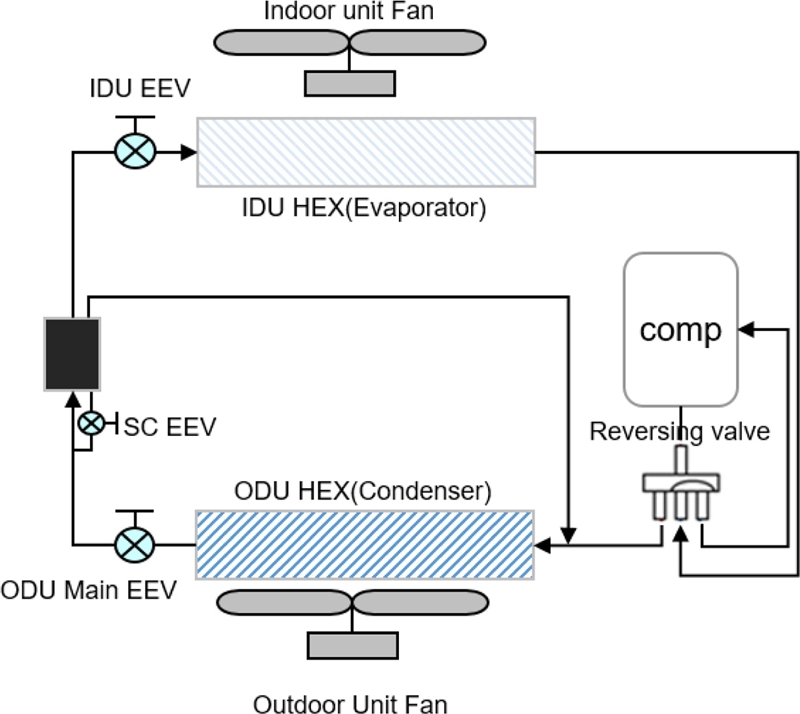
(1) Comp: 압축기를 말한다. 냉매를 압축하여 실내기까지 냉매를 전송하는 역할을 한다. 최근에는 인버터 압축기(용량 가변)가 대부분 사용된다.
(2) Reversing Valve: 사방변밸브를 말한다. 압축기로부터 나온 냉매를 실내기로 또는 실외 열교환기로 보내어 냉방 또는 난방운전이 가능하도록 하는 역할을 한다.
(3) Condenser: 실외열교환기를 말한다. 외부 공기와의 열교환을 통하여 압축기로부터 토출된 고온의 냉매를 응축하는 역할을 한다. 이 과정에서 외부 열원에 에너지를 방출한다.
(4) ODU Main EEV: 실외전자팽창변을 말한다. 냉매의 순환유량을 조절하는 역할을 한다.
(5) SC EEV: 과냉각기 전자팽창변을 말한다. 실외열교환기에서 나온 응축된 냉매가 과냉각되게 하는 역할을 한다.
(6) Evaporator: 실내열교환기를 말한다. 실외기로부터 들어오는 차갑게 응축된 냉매를 실내 공기와 접촉시켜 냉매가 기화하면서 실내공기를 냉각하는 열교환을 담당한다.
이상의 설명은 냉방운전에서의 냉매의 흐름을 설명한 것이다. 만약 난방운전을 할 경우에는 전체 냉매의 흐름은 반대(반시계방향)로 흐르게 되며 실외열교환기는 증발기(Evaporator)가 되고 실내열교환기는 응축기(Condenser)의 역할을 하게 된다.
2.2 냉매량 산출 절차
상업용 시스템 에어컨을 설치하기 전에 각 공간에 대한 냉방부하와 난방 부하를 계산하고 그에 맞는 실외기 및 실내기 용량을 선정한다. 그런 다음 2D 또는 3D 설계도를 통해서 전체 배관 길이를 계산하고 설계도에 맞게 배관을 설치하여 실외기와 실내기를 연결한다. 또한 실외기와 실내기가 통신할 수 있는 통신선과 전원선을 연결한다.
설치된 에어컨의 냉난방 부하를 고려하여 주입할 냉매의 양을 결정하고 배관에 대한 추가 냉매량을 계산한다. 이때 배관의 길이와 배관 직경에 따른 부피와 실내기의 열교환기 면적 등을 고려하여 추가로 필요 냉매량을 계산한다.
하지만 이러한 절차가 설치 현장의 특성, 실내외 온도 등을 완벽하게 고려한 것이 아니어서 설치 엔지니어의 지식과 경험에 의하여 조정이 필요하다.
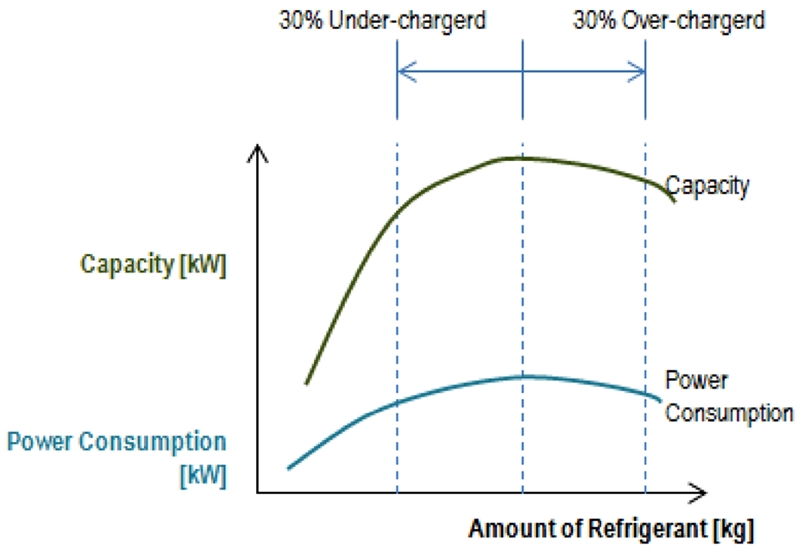
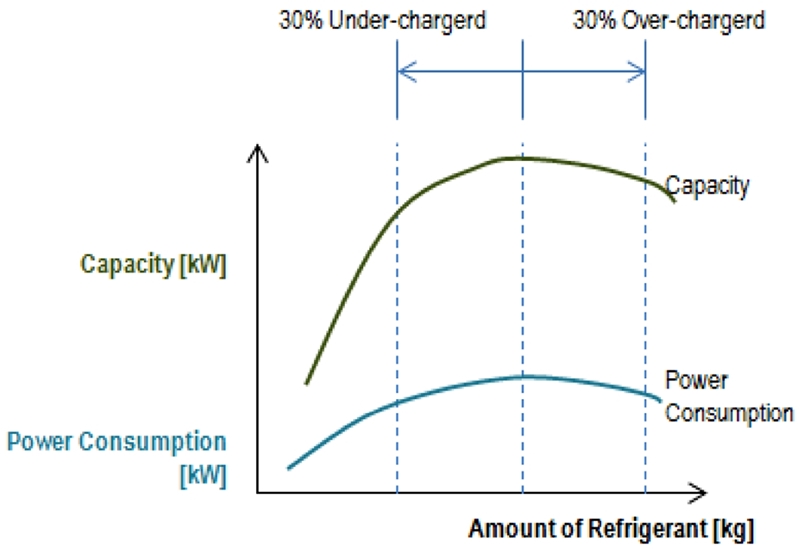
Fig. 3은 냉매의 양에 따라 제품의 성능이 어떻게 변화하는지를 개념적으로 보여주고 있다. 적정량에서 벗어나면 제품의 성능이 감소해서 소비자의 불만을 야기 할 수 있다. 따라서, 냉방 용량과 설치 상황에 따라 적절한 냉매량을 계산하는 방식을 확립하는 것이 필요하다.
Fig. 3Effect of refrigerant amount on capacity
2.3 냉매량 판단을 위한 시운전
충전된 냉매의 양이 적절한지 판단하기 위해서는 시운전이 필요하다. 시운전은 실외 공기 온도와 실내 공기 온도에 따라 냉방 또는 난방 운전하는 것으로 시작한다. 일반적으로 모든 실내기를 운전시키며 약 30분에서 1시간 정도 자동 운전을 시킨다. 일정한 시간이 흐르면 고압과 저압의 격차가 벌어지면서 냉동 사이클을 형성을 하게 되고 이를 통해서 냉매량의 많고 적음을 확인할 수 있다.
냉매량이 적절한지를 판단하기 위해서는 일정한 압축기 주파수와 실외팬의 회전속도를 일정하게 유지하고 실내기의 EEV의 열림 정도를 조정하여 냉매를 순환시켜서 고압과 저압을 형성시킨다. 이 과정을 통해서 냉동 사이클이 안정되게 형성되는지 판단하고 냉방 또는 난방 능력이 설계된 용량에 도달하면 적절한 양의 냉매가 충전되었다고 판단한다.
그러나 이러한 방식에서는 설치 엔지니어가 실외기의 외부온도 및 실내온도를 고려하지 않고 냉동사이클을 해석하거나 경험이 부족한 경우에 잘못된 판단을 내릴 수 있다. 결국 적절하지 않은 냉매량을 충전하여 상업용 시스템 에어컨의 성능을 떨어뜨릴 수 있다.
또한 이 방식으로 냉매량의 많고 적음을 확인할 수 있지만 얼마를 더 넣어야 하는지는 냉매를 조금씩 넣으면서 고압과 저압이 형성되는 상황을 보면서 판단해야 한다. 이러한 방법은 여러 번의 시운전을 필요로 하기 때문에 시간도 많이 걸리는 문제를 안고 있다.
3. 냉매량 결정 알고리즘
적절한 냉매량을 결정하기 위한 알고리즘을 만들기 위해서 냉매량에 영향을 미치는 인자를 파악하였다. 이들 인자와 적정냉매량 간의 상관관계 분석하기 위해서 체임버에서 실험을 수행하였다. 실험에 영향을 미치는 환경 인자를 통제하기 위하여 항온항습으로 유지되는 체임버에 시스템 에어컨을 설치하고 다양한 온도 조건에 따라 실험을 진행하였다. 이렇게 얻은 데이터를 통해 중요한 인자를 찾고 적정 냉매량을 계산하는 회귀식을 구성하였다. 또한 이 회귀식이 다양한 현장에서 사용될 수 있는지를 검증하였고 식을 추가로 보정하였다. 미니텝17을 이용하여 회귀분석을 실시하였다.
3.1 체임버 실험
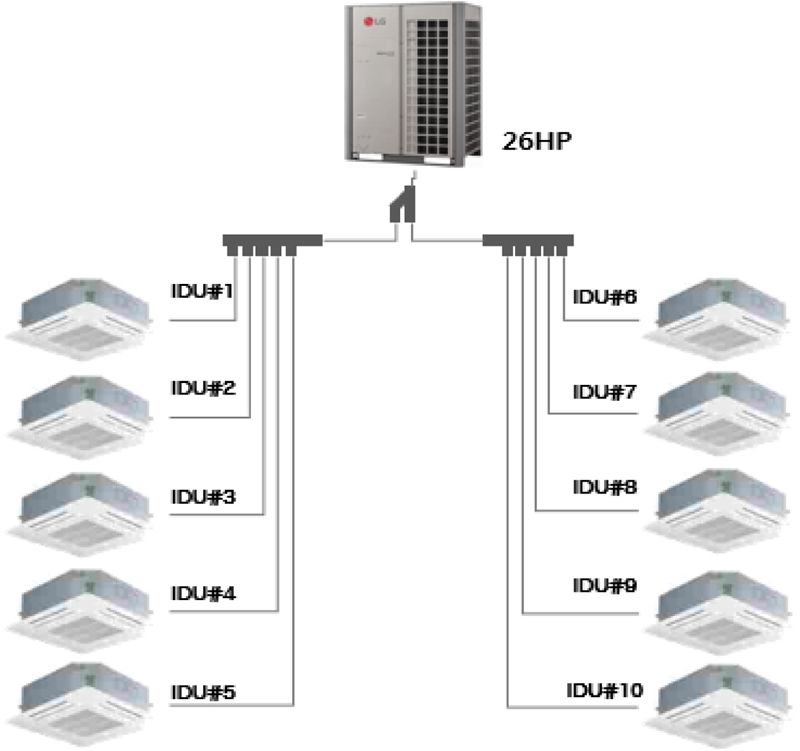
Fig. 4와 같이 26마력의 실외기에 10대의 실내기가 연결된 상업용 에어컨을 체임버에 설치하여 난방 실험을 진행하였다. 체임버 실험을 통해 실외기의 센서 및 기구의 상태, 그리고 실내기의 센서 및 기구의 상태를 모니터링 하였고 상태 정보를 저장하였다.
Table 1은 설치한 제품의 구성을 나타낸다.
Fig. 4Test system for chamber experiment
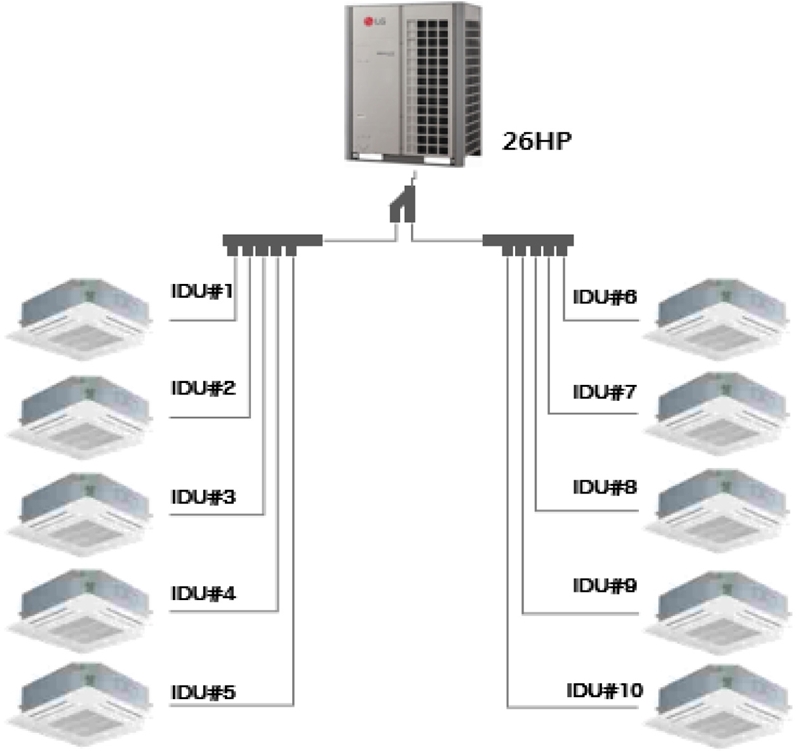
Table 1Configuration of test system
Table 1
|
# of IDUs |
10 |
Total of IDU Capa. |
278 kBtu |
|
ODU Capa. |
26 HP |
Capa. Ratio of ODU vs. IDU |
114% |
|
Chamber Capa. |
40 HP |
Total amount of Ref. |
23.7 kg |
Table 2는 18회 수행한 실험의 조건을 보이고 있다. 냉매의 양을 구분할 수 있는 냉매의 양, 실외 온도, 실내 온도의 9가지 조합에 대하여 2회씩 반복하여 실험을 하였다. 냉매량은 제품의 성능이 10%이상 부족해지는 냉매량의 기준으로 그리고 실외온도와 실내 온도의 조건은 KS 규격의 표준 온도 조건과 저온 조건 시험을 참고하여 진행 하였다.
6 1회 실험시 발생할 수 있는 오차를 검증하기 위해 2회의 실험으로 구성하였다. 1회의 실험은 총 45분의 에어컨의 작동으로 구성되는데 초기 30분은 시스템 사이클의 안정화를 위한 것이고 각종 변수를 15분간 기록하는 방식으로 진행되었다.
Table 2Experimental conditions for test system
Table 2
|
Amount of Ref. |
Outdoor temperature (°C) |
Indoor temperature (°C) |
Repeat # |
|
80% |
7 |
20 |
2 |
|
80% |
7 |
18 |
2 |
|
80% |
-10 |
20 |
2 |
|
100% |
7 |
20 |
2 |
|
100% |
7 |
18 |
2 |
|
100% |
-10 |
20 |
2 |
|
120% |
7 |
20 |
2 |
|
120% |
7 |
18 |
2 |
|
120% |
-10 |
20 |
2 |
3.2 실험 결과 및 회귀식 도출
제품내에서 계측할 수 있거나 냉동 사이클 제어에 사용되는 20가지 인자와 냉매량에 대해서
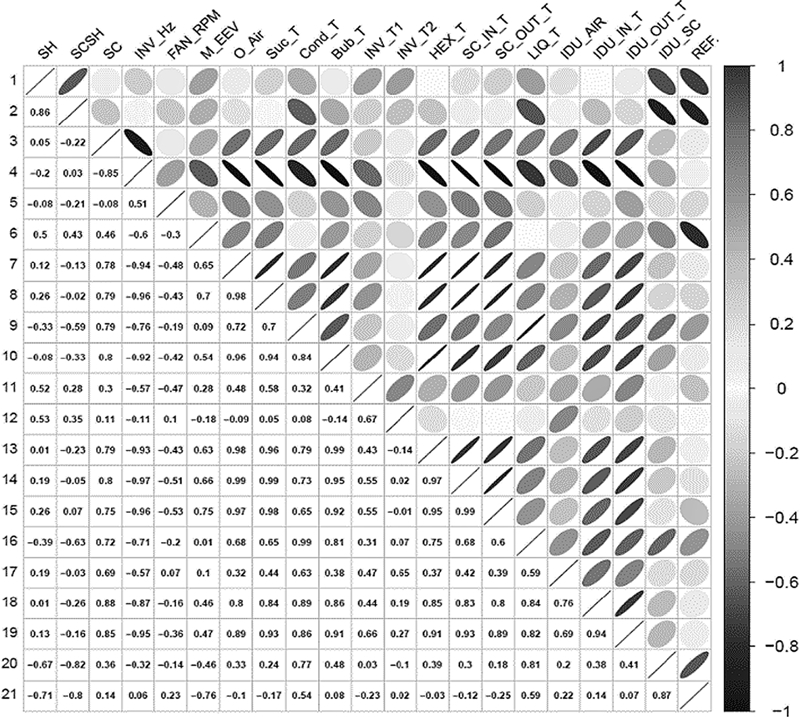
Fig. 5와 같이 상관 관계를 추출하였다. 냉매량과 나머지 20개 인자와의 상관관계를 가장 오른쪽 열에 그림으로 나타내고 있다.
Fig. 5에서 타원의 폭이 좁을수록 그리고 음영이 짙을수록 높은 상관관계를 나타낸다. 또한 타원이 좌측 하단에서 우측상단으로 향한 것은 양의 상관관계를 나타내며 좌측 상단에서 우측 하단 방향의 타원은 음의 상관관계를 나타낸다. 상관관계를 수치적으로 나타내는 상관계수(Correlation Coefficient) 값은 -1.0 ~ 1.0이며 -1.0에 가까울수록 음의 상관관계, 1.0에 가까울수록 양의 상관관계, 0에 가까울수록 상관 관계가 없음을 나타낸다.
Table 3에 20개의 인자와 냉매량의 상관계수를 나타내고 있다.
Fig. 5Correlation of factors vs. refrigerant amount
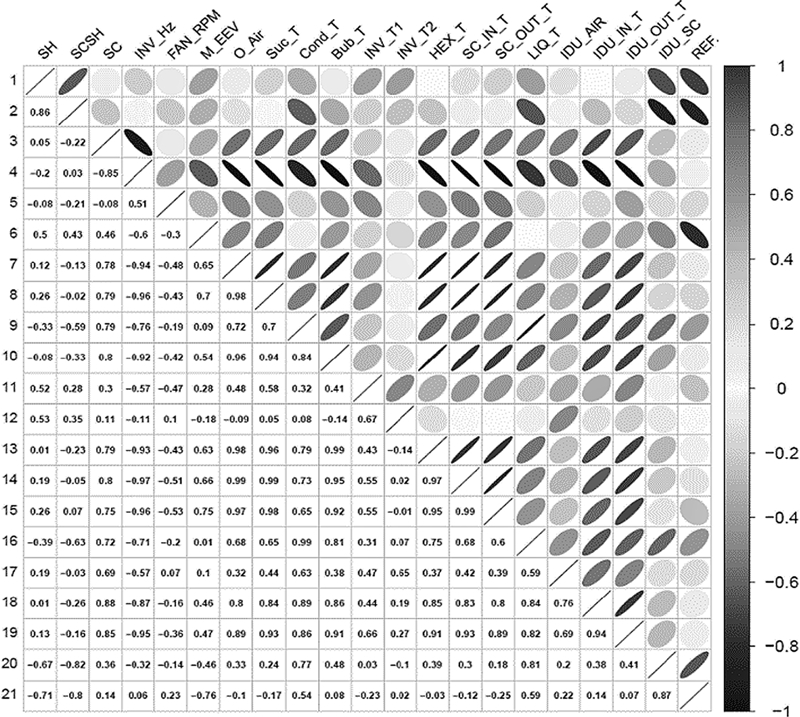
Table 3Correlation coefficients of factors vs. refrigerant amount
Table 3
|
Factor |
SH |
SCSH |
SC |
INV_Hz |
FAN_RPM |
|
Relation |
-0.71383082 |
-0.80404895 |
0.1435531 |
0.05959414 |
0.23155958 |
|
Factor |
M_EEV |
O_Air |
Suc_T |
Cond_T |
Bub_T |
|
Relation |
-0.75934095 |
-0.09555155 |
-0.16940113 |
0.53712978 |
0.0781258 |
|
Factor |
INV_T1 |
INV_T2 |
HEX_T |
SC_IN_T |
SC_OUT_T |
|
Relation |
-0.22528387 |
0.01984765 |
-0.03041261 |
-0.1173633 |
-0.24645366 |
|
Factor |
LIQ_T |
IDU_AIR |
IDU_IN_T |
IDU_OUT_T |
IDU_SC |
|
Relation |
0.588455549 |
0.21815342 |
0.142569314 |
0.07194638 |
0.87299517 |
냉매량과 강한 상관 관계를 나타내는 인자는 흡입과열도(SH), 과냉각과열도(SCSH), 실외전자팽창변 개도(M_EEV), 응축온도(Cond_T), 액관온도(LIQ_T), 실내과냉도(IDU_SC)로 확인되었다. 이 중 흡입과열도와 과냉각과열도 는 강한 양의 상관관계(0.86)를 나타내어 중복되므로 과냉각과열도를 제외하였다. 이를 이러한 인자를 이용하여 냉매량(Ref. 1)에 대한 회귀식을 구하면 다음
식(1)과 같다.
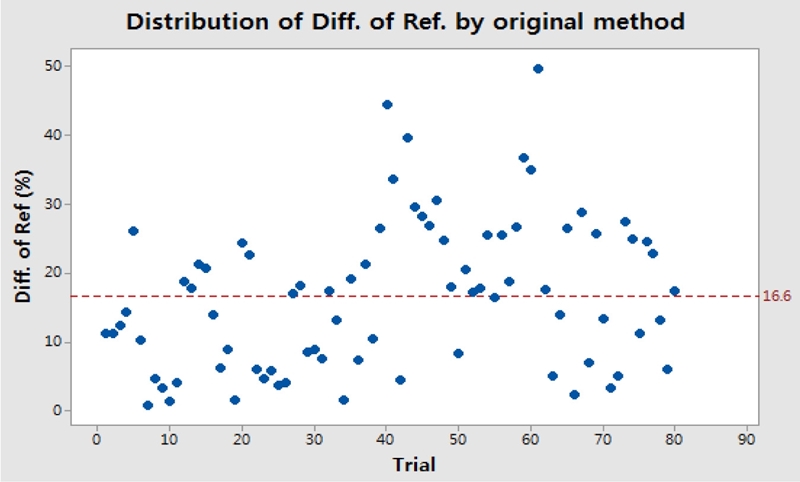
회귀식이 다양한 설치 환경에도 적용 가능한 것인지를 확인하기 위하여 12곳의 설치 장소에서 80회에 걸쳐 현장실험을 실시하였다. 이때 실외 온도는 –3에서 19도 사이에 분포하였고 냉매량을 80%와 100% 사이에서 조정하며 데이터를 획득하였다.
각각에 대한 현장에서 확인한 결과는
Fig. 6과 같다.
Fig. 6의 수직축은 회귀식으로 계산한 냉매량과 정량과의 차이의 절대값을 정량에 대한 퍼센트로 표시한 것이고, X 축은 80회의 현장실험을 나타낸다. 냉매량 오차의 절대값의 평균값은 약 16.6%이다.
Fig. 6Result of field test
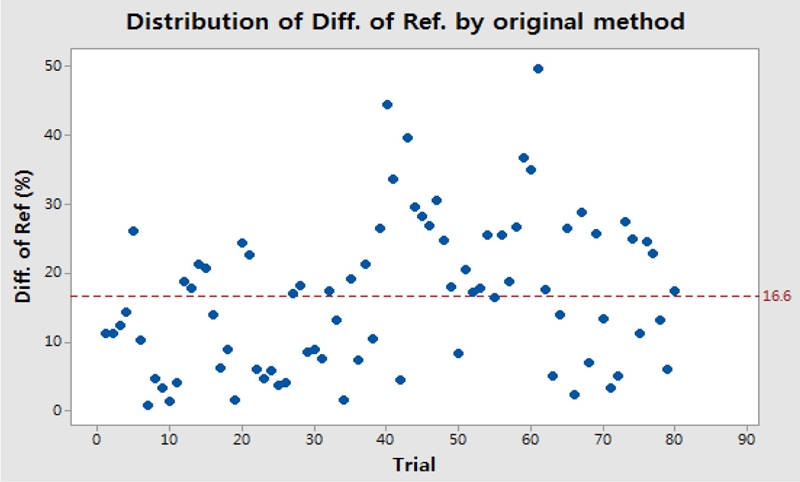
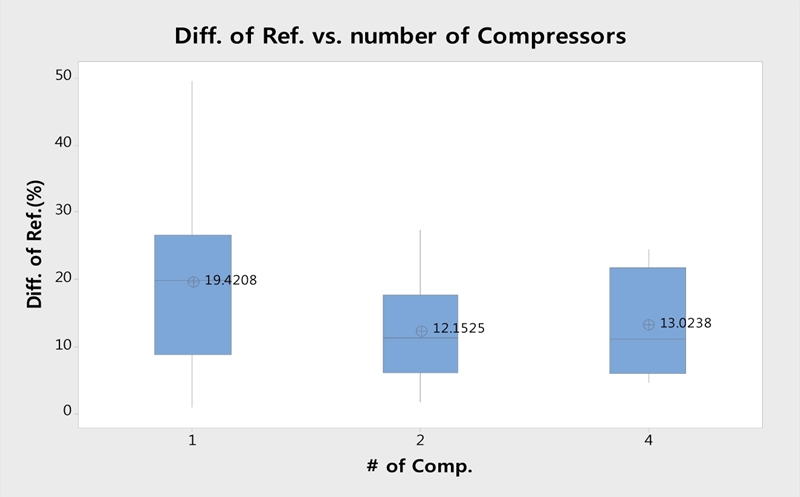
이러한 차이가 나는 원인을 확인하기 위해 제품의 인자들과 설치환경에 대한 인자들이 오차율과 어떤 관계를 갖는지 확인해 보았다. 제품 인자로 압축기의 수에 따른 냉매량의 오차를 검토하였고, 그 결과를
Fig. 7에 표시하였다.
Fig. 7Refrigerant amount error with varying number of compressors

Fig. 7의 수직축은 회귀식으로 계산한 냉매량과 정량과의 차이를 정량에 대한 퍼센트로 표시한 것이고 수평축은 압축기의 수를 의미한다. 압축기의 수가 적을수록 오차의 범위(수직선의길이)가 커지는 것을 알 수 있으며 실험이 충분하지 않지만 압축기가 많을수록 오차가 줄어드는 경향을 추정할 수 있다.
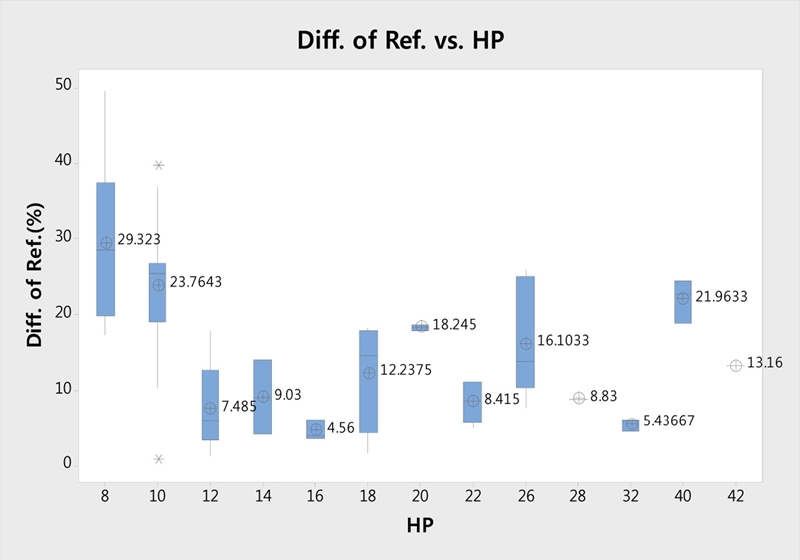
또 다른 제품 인자로서 마력수가 냉매량의 오차에 미치는 영향을 검토하였다.
Fig. 8의 수평축에 HP(마력)로 표시된 제품의 용량에 따라 수직축에 표시된 적정 냉매량과의 오차율을 보여주고 있다.
Fig. 8Refrigerant amount error with varying capacity
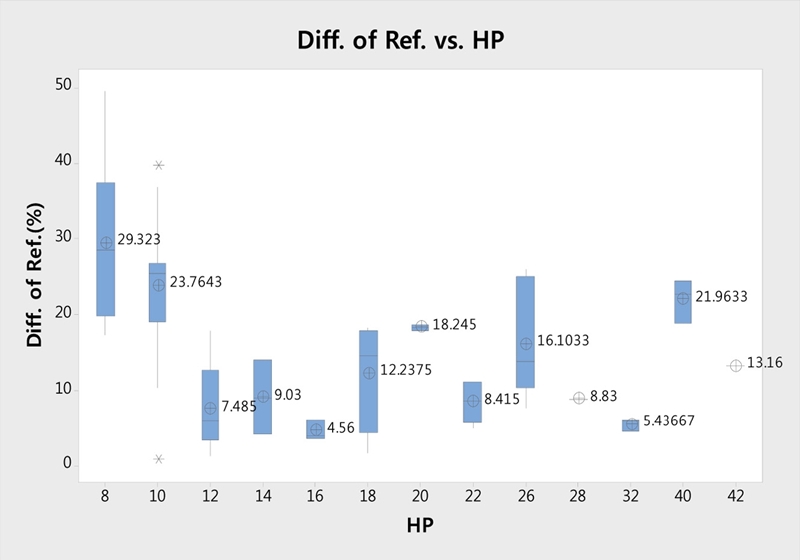
설치환경에 대한 인자로 외기온도를 검토하였는데
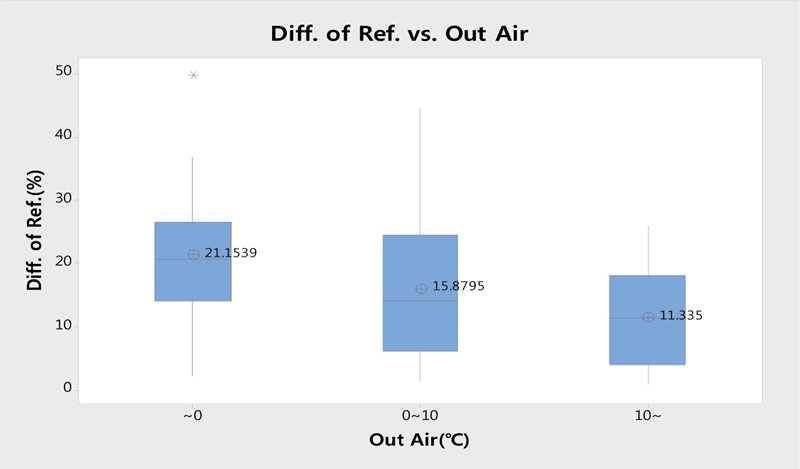
Fig. 9와 같이 외기온도가 낮아질수록 냉매량 오차가 커짐을 알 수 있었다. 이는 외기온도가 낮을수록 실외 열교환기를 지나면서 외부로부터 받는 열량이 낮아 지므로 압축기로 흡입되는 온도가 낮아지고 압축기로 토출되는 고압이 낮아지게 되므로 응축온도(Cond_T)가 낮아지므로
식(1)에서 계산되는 냉매량이 줄어든다.
Fig. 9Refrigerant amount error with varying outdoor air temperature
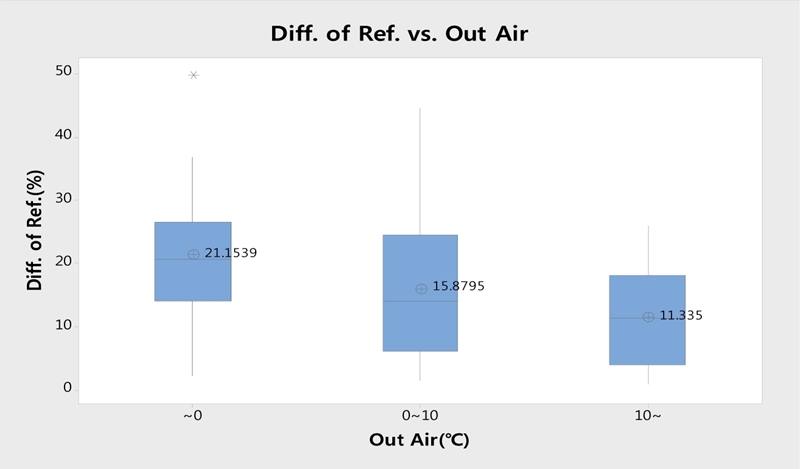
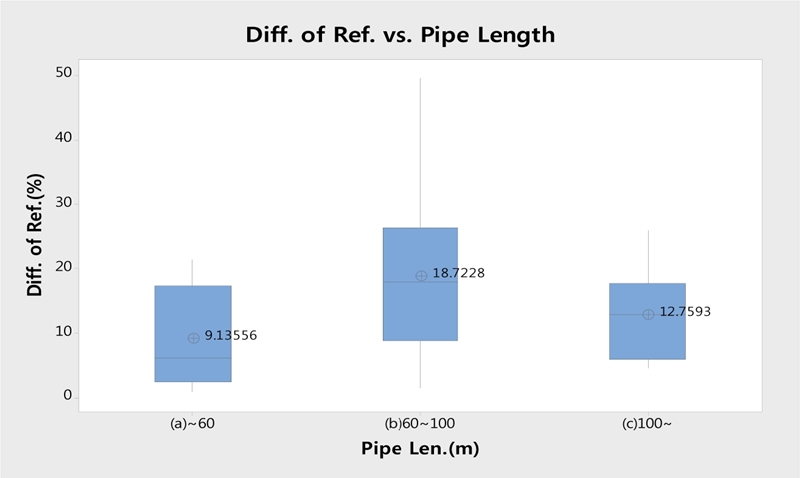
마지막으로 배관길이의 영향을 세 구간으로 나누어 검토하였다.
Fig. 10에서 볼 수 있듯이 배관길이가 짧을수록 냉매량 오차가 작았고 길수록 냉매량 오차가 커짐을 확인하였다. 이는 배관길이가 길수록 압력손실이 발생하고 이는 전체 시스템의 압력이 낮아지므로 압축기에서 토출되는 고압이 낮게 형성되게 한다. 이는 응축온도를 낮게 형성하고 응축온도(Cond_T)가 낮아지므로
식(1)에서 계산되는 냉매량이 줄어든다. 이와 같은 제품과 설치환경의 특성을 고려하기 위하여
식(1)에 환경함수 K를 추가하여 냉매량의 오차를 줄이고자 하였다.
Fig. 10Refrigerant amount error with varying pipe length
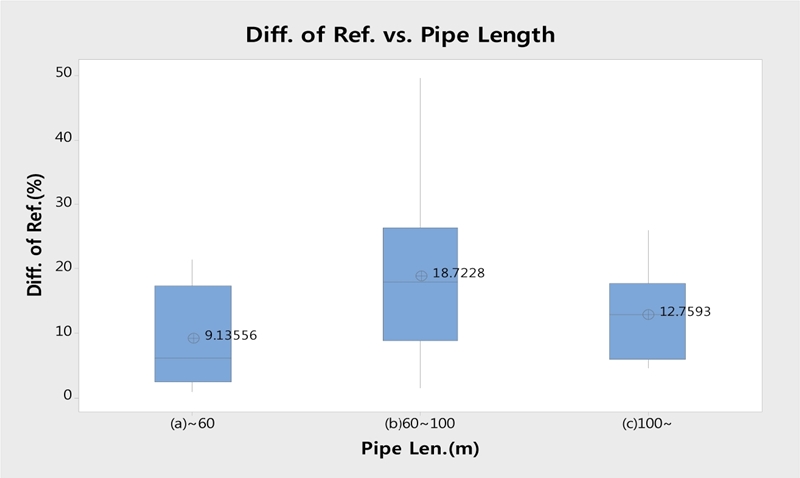
K는 환경함수를 나타내며
식(3)과 같이 표현된다.
식(2)와
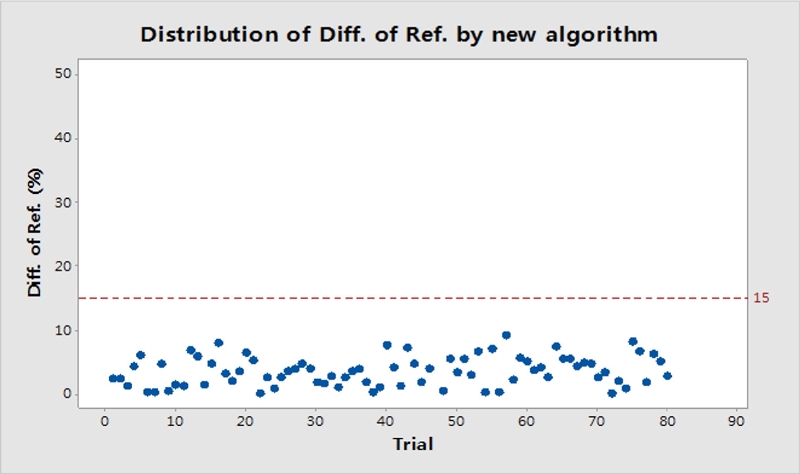
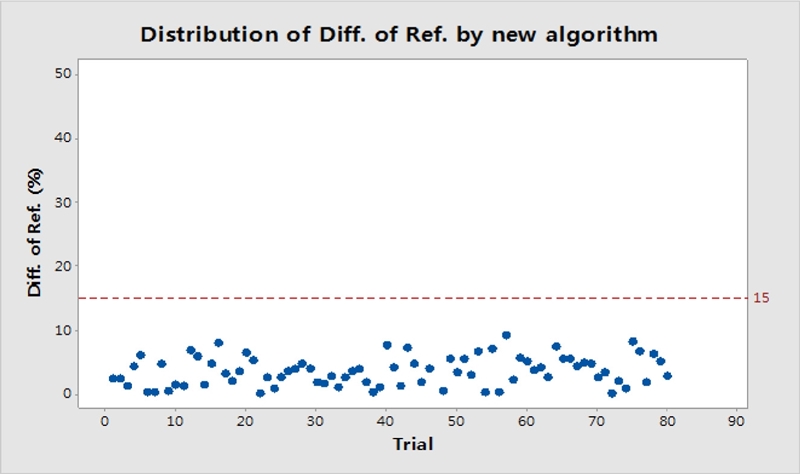
식(3)을 이용하여 냉매량을 다시 계산하고 현장에서 얻은 정량과 비교한 결과를
Fig. 11에 나타내었다. 그 결과 평균 오차율이 16.6%에서 3.6%으로 개선되었다.
Fig. 11Result of field test with environment function
4. 결론
상업용 시스템 에어컨의 냉매량 계산에 주요한 인자는 응축온도, 흡입과열도, 실내과냉도, 실외전자팽창변 개도 등이며 추가로 외기온도, 압축기 수, 총배관길이 등이 냉매량에 영향을 미치는 환경인자임을 확인할 수 있었다. 체임버에서의 실험을 통하여 적정 냉매량에 영향을 미치는 주요 인자를 확인할 수 있었지만 시스템 에어컨의 다양한 설치 조건을 모두 고려할 수 없어서 현실과 차이가 있음을 발견하였다. 이를 보완하기 위해서는 현장의 다양한 상황에서 얻은 결과를 이용하여 환경함수를 추가하였다. 그 결과 체임버 실험에서 얻은 회귀식의 평균 오차율 16.6%를 3.6%로 개선할 수 있었다.
앞으로 더 다양한 조건의 현장에 설치한 정보를 수집할 수 있다면 이를 DB로 축적하고 이것을 바탕을 좀더 정확한 적정 냉매량을 계산할 수 있을 것이다. 또한 대량의 데이터를 이용하여 인공지능 기법을 적용할 수도 있을 것이다.
REFERENCES
- 1.
Shi, S., Li, G., Chen, H., Hu, Y., Wang, X., et al., “An Efficient VRF System Fault Diagnosis Strategy for Refrigerant Charge Amount Based on PCA and Dual Neural Network Model,” Applied Thermal Engineering, Vol. 129, pp. 1252-1262, 2018.
10.1016/j.applthermaleng.2017.09.117
- 2.
Sun, S., Li, G., Chen, H., Huang, Q., Shi, S., et al., “A Hybrid ICA-BPNN-Based FDD Strategy for Refrigerant Charge Faults in Variable Refrigerant Flow System,” Applied Thermal Engineering, Vol. 127, pp. 718-728, 2017.
10.1016/j.applthermaleng.2017.08.047
- 3.
Kim, W. and Braun, J. E, “Evaluation of The Impacts of Refrigerant Charge on Air Conditioner and Heat Pump Performance,” International Journal of Refrigeration, Vol. 35, No. 7, pp. 1805-1814, 2012.
10.1016/j.ijrefrig.2012.06.007
- 4.
Tassou, S. A. and Grace, I. N., “Fault Diagnosis and Refrigerant Leak Detection in Vapour Compression Refrigeration Systems,” International Journal of Refrigeration, Vol. 28, No. 5, pp. 680-688, 2005.
10.1016/j.ijrefrig.2004.12.007
- 5.
Choi, H., Cho, H., and Choi, J. M., “Refrigerant Amount Detection Algorithm for a Ground Source Heat Pump Unit,” Renewable Energy, Vol. 42, pp. 111-117, 2012.
10.1016/j.renene.2011.08.055
- 6.
Biography
- Seongjin Shin
Ph.D. in Department of Mechanical Engineering from Pusan National University. He is a principal research engineer at LG Electronics. His current research interests include the software design and the applications in air conditioning system control.
- Seungjun Lee
Ph.D in Department of Mechanical Engineering from Pusan National University. He is a principal research engineer at LG Electronics. His current research interests include cycle control, system design and compressor operation technology.
- Junghwan Lee
Senior reseacher in LG Electronics. His current research interests include the cycle/sw design and the application in air conditioning system control.
- Suk Lee
Professor in the Department of Mechanical Engineering, Pusan National University. His research interest is network based system.