ABSTRACT
It was a requirement to use electronic components developed and operated by MANPAD in the military wheel vehicle with greatly improved operational radius and quickness and maneuverability. The objective of this study was to add the structure of the newly developed equipment for future compatibility with each other, and design it according to the requirements of vehicle installation. As the operating environment changes from one type of equipment to another, that is operated by a person, the differences between the environmental specifications and characteristics of the two types of weapons are compared. In addition, dynamic characteristics analysis and testing of equipment units were carried out in order to confirm whether the equipment can be normally operated with the disturbance (vibration / shock) that will be continuously received as the operating environment changes. The physical properties of the PCB components were verified through actual environmental tests after confirming the difference between the values shown between the commercial program and the reference documents.
-
KEYWORDS: Military wheel vehicle, Mounting equipment, Transmissibility, Shock, Shock response spectrum, Vibration response spectrum
-
KEYWORDS: 차륜형 차량, 탑재장비, 전달률, 중격, 충격응답 스펙트럼, 진동응답 스펙트럼
NOMENCLATURE
Length of the circuit board edge parallel to the component (mm)
Length of the electronic component, mm
Circuit board thickness (mm)
Relative position factor for the component mounted on the board
Constant for different types of electronic components
1. 서론
전쟁 상황에서 아군과 적군을 식별하여 교전하는 것은 매우 중요한 절차이다. 아군과 적군을 식별할 수 있도록 하는 것이 피아식별 장비이며, 상대 교전을 하는 무기 체계에는 필수적인 장비이다. 피아식별 장비는 각 무기 체계의 운용 조건에 맞는 형태로 개발되어 운용되고 있다.
장착 조건에 따라 독립형 장비로 개발되기도 하고, 카드형태로 개발되어 탑재되어 운용되기도 한다.
MANPAD 형태로 개발이 완료되어 운용 및 검증된 피아식별 장비를 차륜형 차량에서 탑재하여 운용할 수 있도록 개발 요청되었다. 본 논문에서는 피아식별 장비를 차량에 탑재되는 탑재 장비로 통일한다.
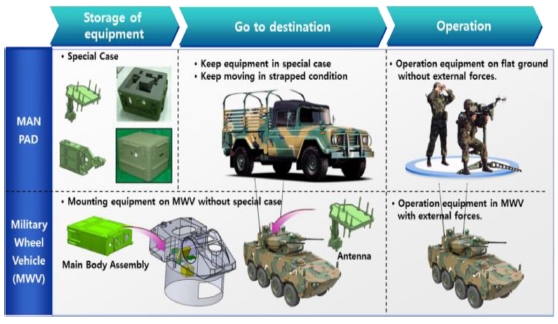
MANPAD 형태의 운용 개념은 전용 보호 케이스에 장비를 보관하고, 차량으로 원거리 이동하며, 차량이 진입하기 어려운 작전지까지는 병사가 휴대하여 이동하는 방식이다. 또한 장비 운용 시 먼저 평평한 지면에 발사대를 설치하고, 탑재장비를 장착, 운용하는 형태이다.
병사가 휴대할 수 있게 하기 위해 무게를 최소화하고, 운용간 발생할 수 있는 외란을 견딜 수 있도록 강건하게 설계되었으며, 전용 보호용 케이스로부터 장비가 보호받도록 설계되어 있다. 개발 완료 후 이미 실전에 투입되어 운용 중이며, 실제 환경에서 성능이 입증된 장비이다. 검증된 장비를 개발 중인 차륜형 차량에 탑재하여 운용할 수 있다면, 추가적인 개발 비용과 개발 기간 등을 단축시킬 수 있기 때문에, MANPAD용으로 개발된 장비를 차량에 탑재하여 운용할 수 있는지 검토 요청되었고, 필요 시 장비의 최소변경을 통해 적용하고자 하였다.
휴대용 무기체계와 다르게 차량에 탑재할 경우, 작전 지역으로 이동하는 이동 간에도 지속적인 외란을 받게 되며, 대공포 사격 간에도 사격 충격을 받는 형태로 운용환경이 변경되게 된다. 이런 운용환경 변화를 극복하고 장비가 안정적으로 운용될 수 있도록 하며, 유사 시 MANPAD에서 사용할 수 있도록 호환성 있게 설계하는 것이 목표이다.
1,2
탑재장비는
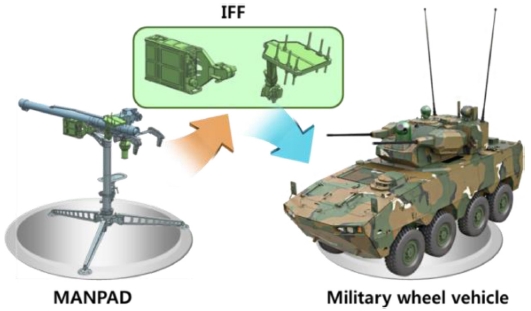
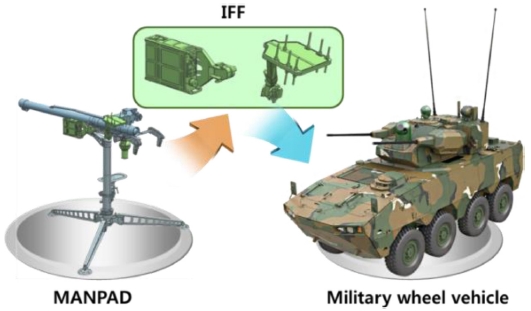
Fig. 1에서 보는 것과 같이 크게 신호를 생성하는 본체와 송출하는 안테나로 구성되어 있는데, 안테나의 경우 메인 형상은 유지할 수 있지만 장착되는 방식의 변경이 필요해서 수정하기로 하였고,
3 본체의 경우는 형태를 변경하지 않고, 장착할 수 있는 장착대를 차량 장착 공간과 요구사항에 맞게 추가하는 방식으로 결정되었다.
Fig. 1 The mounting equipment according to platform system
본 연구는 형상 변경이 되지 않는 본체를 차량에 탑재할 경우, 변경된 운용 조건에서 가장 큰 영향을 미칠 수 있는 진동 및 충격 특성에 관한 연구를 진행하였다.
차량에 장착하여 운용할 수 설계된 장착대를 포함하여 변경된 운용조건에서의 외란 특성을 비교하였고, 개발 시 제안된 절연기에 대한 특성 평가를 실시 및 성능을 검증하였다. 또한 PCB 단위에서의 주요 특성을 파악하여 주기적으로 교체해야 하는 절연기를 제외하고 운용 가능한지에 대한 내용을 검토하였다.
2. 본론
2.1 장비간 운용 환경 비교
MANPAD로 운용될 경우와 차륜형 차량에 탑재하여 운용될 경우, 탐재장비의 운용환경 변화를
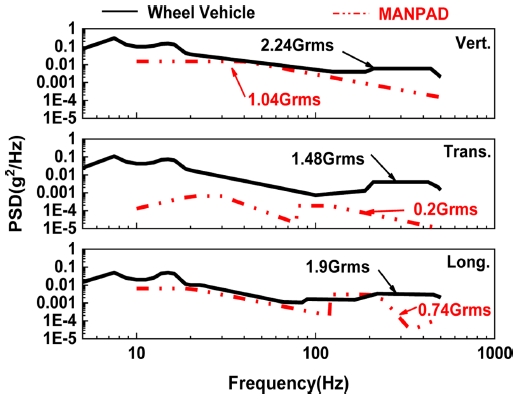
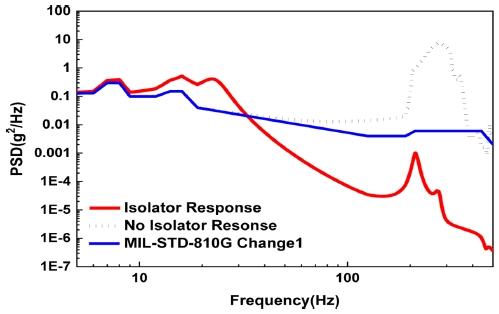
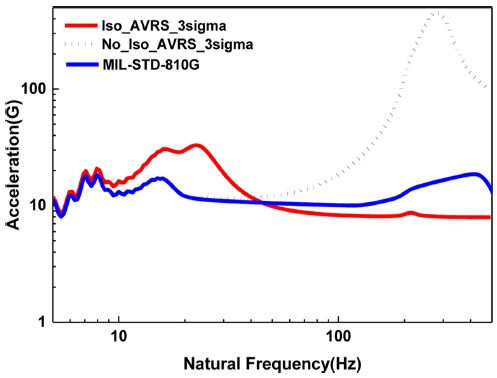
Fig. 2에 나타냈고, 서로 다른 무기체계의 진동 규격에 대한 비교를
Figs. 3과
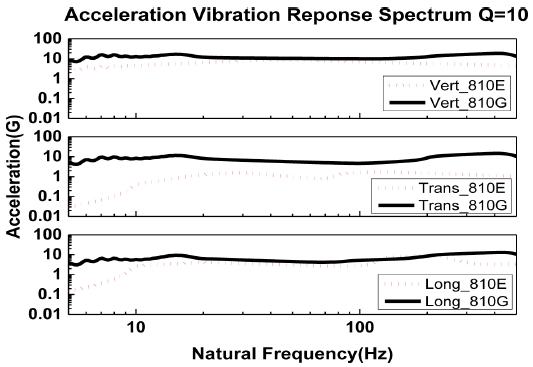
4에 각각 나타냈다. 각 축에 대한 Power Spectrum Density 비교와 Vibration Response Spectrum 비교를 통해 확인할 수 있는 것과 같이 차륜형 차량의 진동 규격이 MANPAD의 진동 규격보다 대부분 큰 것으로 나타난 것을 확인할 수 있다.
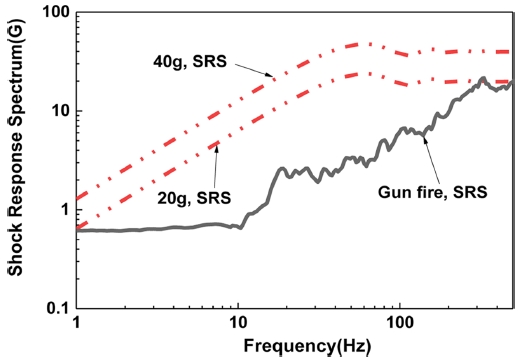
4,5 충격 규격의 경우, 차륜형 차량에 대한 충격 규격은 MIL-STD-810에 따르면, Saw Tooth, 20 g, 11 ms로 규정되어 있으나,
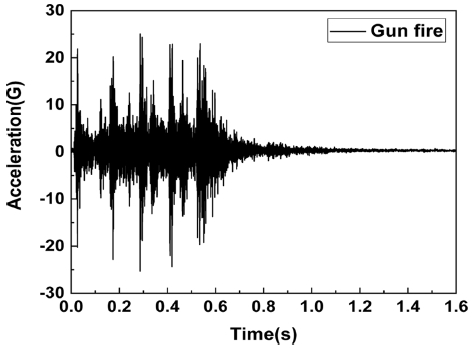
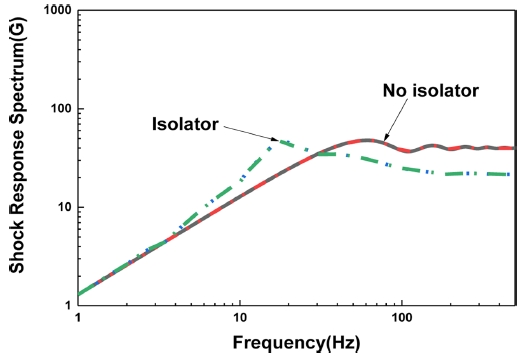
Fig. 5와 같이 사격 측정 데이터를 기준으로
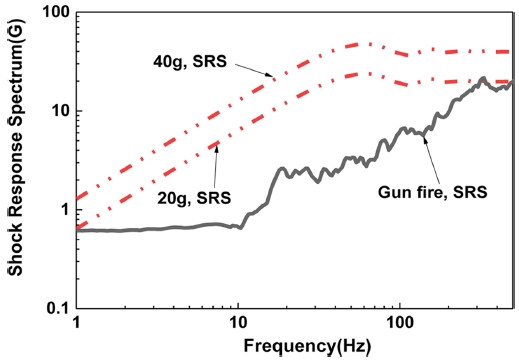
Fig. 6에 나타낸 것과 같이 Shock Response Spectrum을 비교한 결과 전체적인 충격 값을 만족하기 위해 Tailoring되어 40 g, 11 ms로 강화되었다.
6,7
Fig. 2Comparison of the concept of the mounting equipment according to system
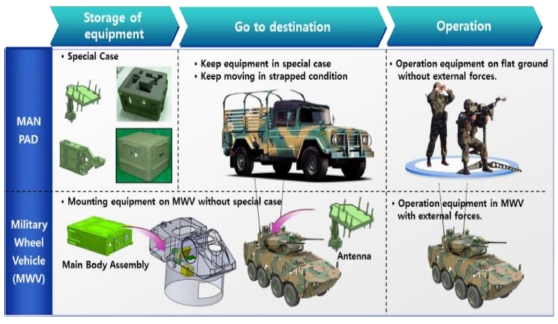
Fig. 3Comparison of vibration specification
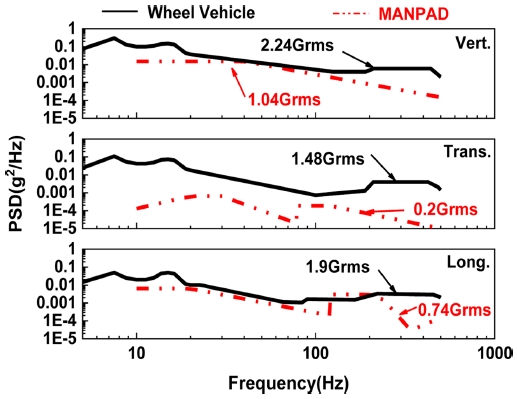
Fig. 4Comparison of vibration response spectrums
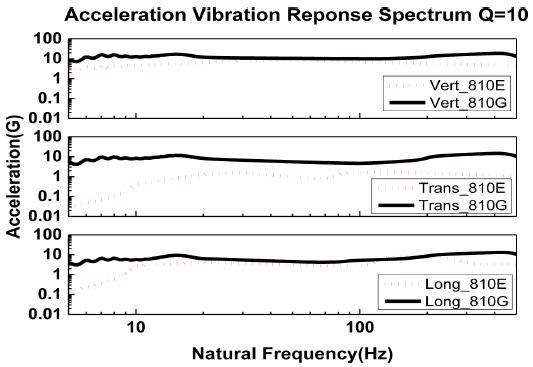
Fig. 5Acceleration measurement of gunfire for MWV
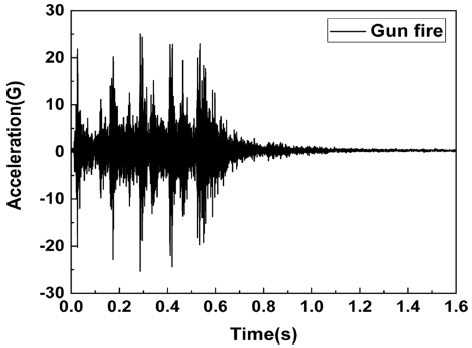
Fig. 6Comparison of shock response spectrums
2.2 탑재장비 동특성 검토
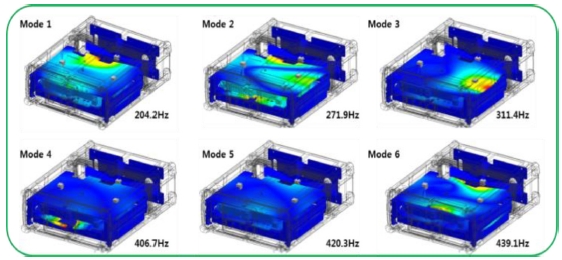
탑재 장비가 운용될 환경에서의 특성을 확인하기 위해 탑재장비 본체에 대한 동특성 해석을 실시하였다. 해석간 불필요한 구멍 및 형상을 단순화하고, PCB 주요 구성품에 대한 무게 등을 포함하여 동특성 해석을 실시하였고, 그 결과는
Fig. 7에 나타냈다.
Fig. 7Mode shape of the mounting equipment by simulation
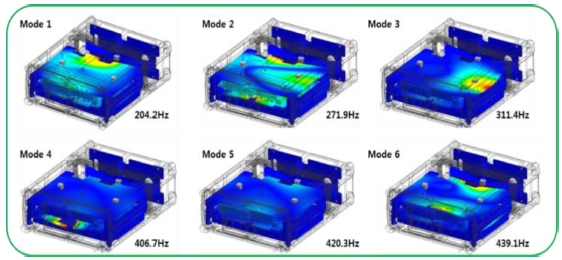
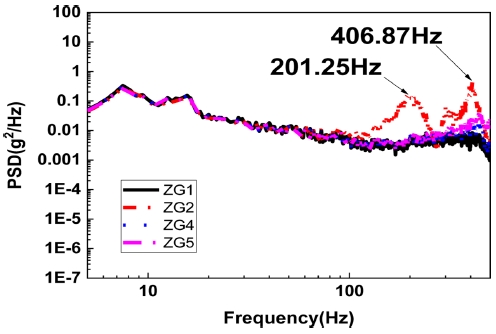
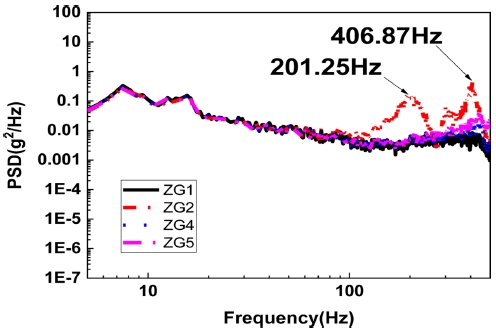
개발 초기 탑재장비 본체에 대한 동특성 해석 결과가 1차 고유진동수가 447.56 Hz로 나타났었는데, 이는 PCB 기판 FR-4에 대한 물성치 데이터를 제작업체나 문헌에서 제공되는 것이 아닌 상용 프로그램에서 제공된 데이터를 이용하였고, 최종 해석 시에는 유사 기판에 대한 문헌을 참조하여 해석을 실시하였는데,
Table 1에 비교하여 나타냈다.
8 해석간 차이가 발생하여 탑재장비에 대한 검증 실험을 실시하였다.
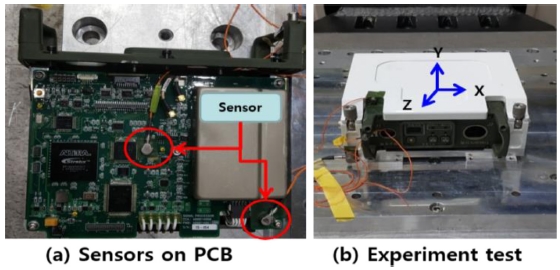
Fig. 8에서 보는 것과 같이 PCB에 센서를 부착하고 진동시험을 실시하여,
Fig. 9에 나타난 것과 같이 1차 고유진동수가 201.25 Hz로 확인하여, 참조한 물성치가 유효하다는 것을 검증하였다.
Table 1Comparison of the simulation result for PCBs
Table 1
|
fr-4 |
Properties |
Nat.
freq.
(Hz) |
Ten.
GPa |
Shear
GPa |
Poisson’s
ratio |
Mass
density
(kg/m3) |
CDR
(Ansys) |
20.4
(X) |
9.2
(XY) |
0.11
(XY) |
1800 |
447.56 |
18.4
(Y) |
8.4
(XZ) |
0.09
(YZ) |
|
15
(Z) |
6.6
(YZ) |
0.14
(ZX) |
|
Final
(Paper) |
16.9
(X, Y) |
3.03
(XY) |
0.129
(XY) |
1860 |
204.2 |
7.44
(Z) |
2.41
(YZ, ZX) |
0.417
(YZ) |
|
|
|
0.183
(ZX) |
|
Fig. 8Experiment of modal testing for PCBs
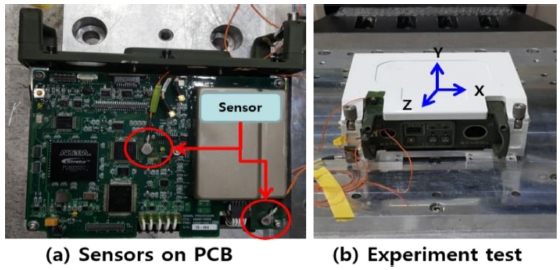
Fig. 9Result of natural frequencies of PCBs by experiment
2.3 진동 및 충격 절연을 위한 절연기 적용
차륜형 차량에 탑재하여 운용될 경우,
Fig. 3에서 나타낸 것과 같이 기존 운용환경보다 더 큰 외란을 받게 되는 것이 확인되어, 외란을 줄일 수 있도록 요청되었고, 개발 초기에 유사 장비에서 적용 및 검증된 Cup-Mount 형태의 절연기를 적용하는 것으로 추진하고, 외란을 저감하는 것을 목표하였다.
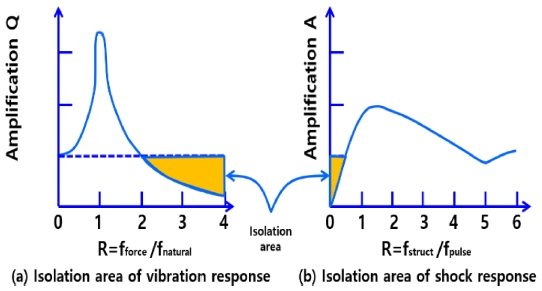
9-11 요구되는 환경 규격을 검토한 결과, 진동의 경우는 5-500 Hz까지 넓은 범위서 광범위한 주파수가 인가되는 것으로 가장 크게 인가되는 특정 주파수를 회피하는 것은 어렵기 때문에 탑재장비의 응답이 크게 나타나는 1차 고유진동수인 204.2 Hz를 회피할 수 있는 것을 목표하였다. 충격의 경우 40 g, 11 ms의 입력을 줄이기 위해서는
Fig. 10(b)의 충격 절연 구간에 들어가기 위해서는 충격 주파수와 시스템 응답이 약 0.7 이하로 형성될 수 있도록 절연기가 적용된 시스템 주파수가 약 30 Hz 이하의 주파수를 갖는 절연기를 선택하는 것이 유효할 것으로 판단되었다.
Fig. 10Dynamic response curves of isolation areas
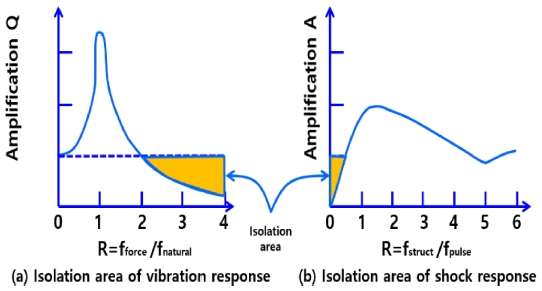
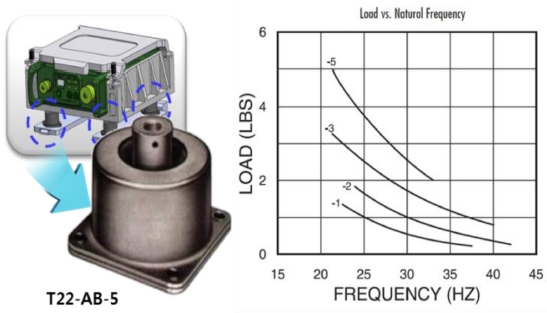
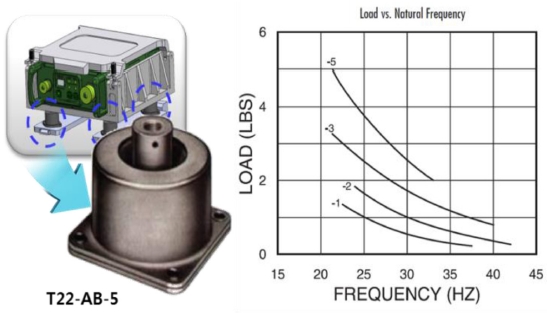
Fig. 10의 진동과 충격을 만족할 수 있는 30 Hz 근방의 주파수를 갖는 절연기선정이 요구되었고, 개발 시 선정된 절연기는
Fig. 11에 나타난 것과 같이 Cup-Mount 형태의 절연기로 군용 장비에 주로 사용되며, 전자 구성품의 진동 및 충격 감소을 위해 주로 적용되고 있는 부품이다.
Fig. 11The characteristic of cup-mount type isolator
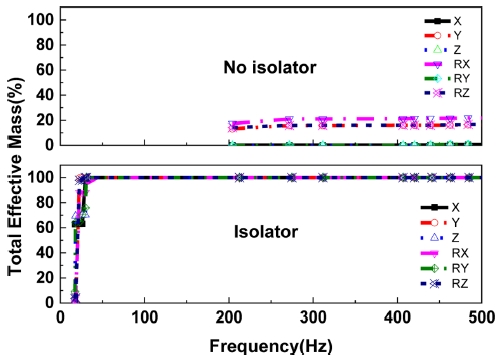
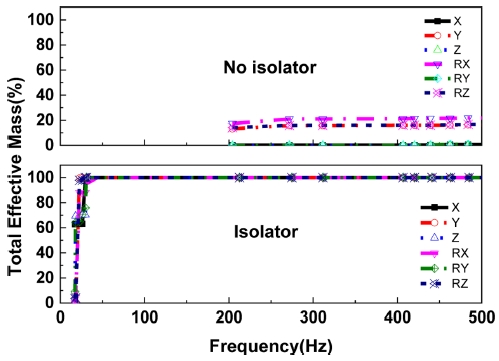
절연기를 적용한 전과 후의 총유효질량(Total Effective Mass)을 확인한 결과를
Table 2과
Fig. 12에 나타냈는데, 절연기 적용 후 진동 응답이 절연기를 적용한 주파수 30 Hz 미만에서 대부분 감당하고 있어 진동이 절연되고 있음을 확인할 수 있다.
12 절연기 적용 후 PCB 응답 주파수 차이는 Isolator 적용 간 해석 차이로 추정된다.
Table 2Total effective mass for mounting equipment with isolator by simulation
Table 2
|
# |
Freq.
(Hz) |
Modal effective mass (%) |
|
X |
Y |
Z |
RX |
RY |
RZ |
|
1 |
17.44 |
62.91 |
0.04 |
0.15 |
0.13 |
8.99 |
3.39 |
|
2 |
18.07 |
63.08 |
0.61 |
69.31 |
4.45 |
64.06 |
4.03 |
|
3 |
22.83 |
63.17 |
99.73 |
70.09 |
87.96 |
64.87 |
97.84 |
|
4 |
26.14 |
63.25 |
99.74 |
70.09 |
87.96 |
70.43 |
97.87 |
|
5 |
29.72 |
99.74 |
99.75 |
70.40 |
87.99 |
75.86 |
99.89 |
|
6 |
31.00 |
100 |
99.99 |
100 |
99.99 |
100.00 |
99.99 |
|
7 |
212.60 |
100 |
99.99 |
100 |
99.99 |
100.00 |
99.99 |
|
8 |
274.80 |
100 |
99.99 |
100 |
99.99 |
100.00 |
99.99 |
|
9 |
311.60 |
100 |
99.99 |
100 |
99.99 |
100.00 |
99.99 |
|
10 |
406.60 |
100 |
99.99 |
100 |
99.99 |
100.00 |
99.99 |
|
50 |
1669 |
100 |
99.99 |
100 |
99.99 |
100.00 |
99.99 |
|
Total |
100 |
99.99 |
100 |
99.99 |
100 |
99.99 |
Fig. 12Total effective mass of the mounting equipment
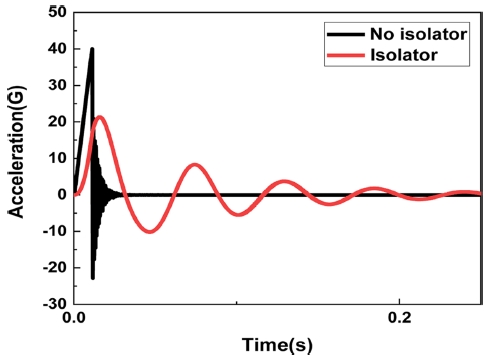
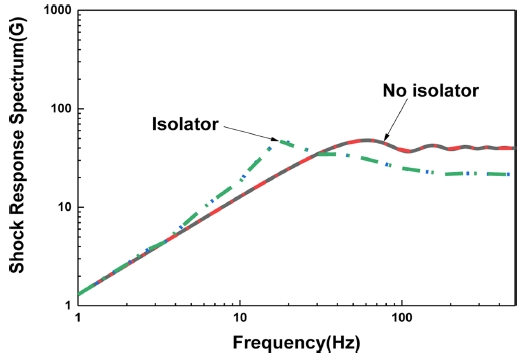
Figs. 13부터
16까지는 절연기 적용에 따른 시뮬레이션 결과를 설명하였는데, 각각 PSD, VRS, 충격에 대한 시간응답과 SRS 응답을 나타냈다.
Fig. 13Comparison of response for PSD with simulation
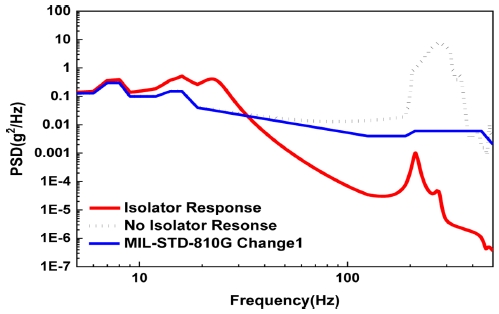
Fig. 14Comparison of response for VRS with simulation
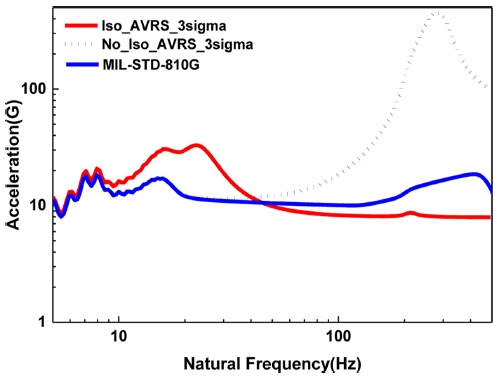
Fig. 15Comparison of response of shock with simulation
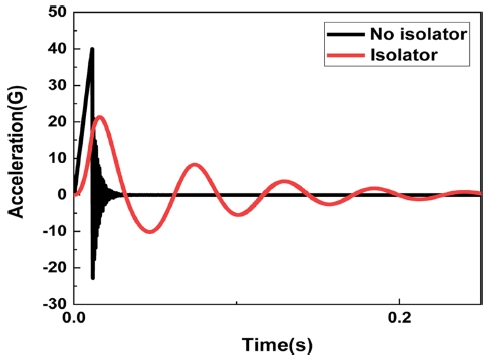
Fig. 16Comparison of response for SRS with simulation
절연기 적용 여부에 따라 응답이 확연히 줄어들고 있음을 확인할 수 있는데, Vertical 방향의 절연기 주파수가 22.83 Hz로 응답이 가장 크게 나타나고 차단 주파수(Cut-Off Frequency)인 32.28 Hz 이후로 절연이 이루어짐을
Figs. 13과
14에서 확인할 수 있다. 또한 충격에 대한 시간 응답도 확연히 줄어든 것을
Fig. 15에서 확인되며, SRS에 대한 응답도 전체적으로 줄어든 것은
Fig. 16에서 확인할 수 있다.
3. 성능검증 및 절연기 제외 검토
3.1 환경시험을 통한 성능 검증
차륜형 차량에 탑재되는 탑재장비를 실제 환경시험을 통해 성능을 검증하였다. 성능 검증은 요구되는 진동 및 충격 규격의 시험을 실시하고 탑재장비의 자체 성능 점검과 전용 시험장비를 통해 성능을 검증하는 방향으로 진행하였다.
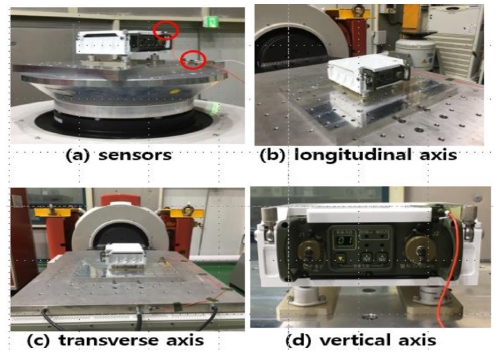
Fig. 17(a)와 같이 완성된 탐재장비 내부에 센서를 부착할 수 없기 때문에, 환경시험치구와 장착대에 부근에 센서를 부착하고
Figs. 18(b)-
18(d)와 같이 축 별 진동 및 충격시험을 실시하였다.
Fig. 17Vibration and shock environmental test
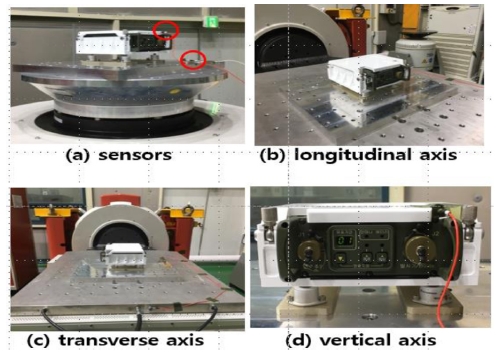
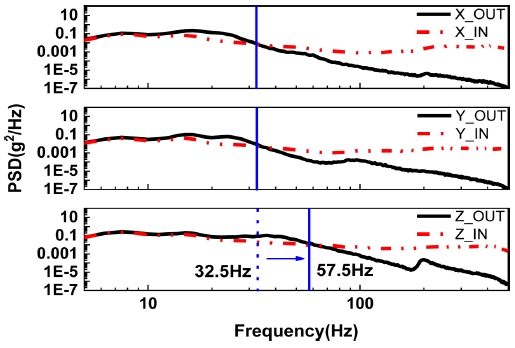
Fig. 18Result of the response of vibration
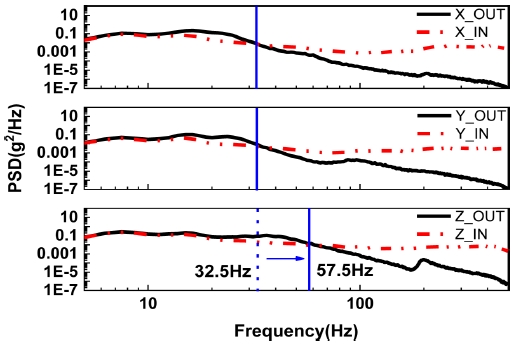
Fig. 18에는 실제 환경시험 중 진동시험에 대한 입력과 응답을 나타낸 것으로 절연기 적용 후 전체적으로 응답이 줄어든 것을 확인할 수 있다. X, Y축 진동 시험 후 Z축에 대한 진동시험을 실시하였는데, Z축 응답이 다른 축의 응답에 비해 진동 절연 주파수가 32.5 Hz에서 57.5 Hz로 이동된 것을 확인할 수 있는데, 이것은 각 축당 4시간씩 진동시험 실시 후 마지막 축에서 절연기의 피로에 의한 성능 저하로 확인되었으나 진동 시험 후 모든 성능이 문제없음이 검증되었다. 또한 진동시험 후 충격 시험도 진행하였으나, 계측장비의 오류로 인해 충격 데이터 획득은 실패하였으나 시험 후 성능 점검으로 모든 성능이 정상임을 확인 및 검증하였다.
3.2 부품설계 강건성 검토를 통한 절연기 제외 검토
장기간 이루어지는 환경시험 후 피로에 따른 절연기의 수명저하는 필연적으로 발생하게 되며, 주기적 확인을 통해 교체가 이루어져야 한다. 절연기를 적용하는 이유는 외부에서 들어오는 외란(수송진동, 충격 및 사격 충격)으로부터 장비를 보호하고 신뢰성 확보를 목표로 하기 때문이다. 그러나 장시간 사용에 따른 주기적 교체가 필연적이며, 그에 따른 비용 발생과 정비가 부수적으로 수반된다. 탑재장비가 차륜형 차량에 장착하여 운용될 때, 탑재장비 자체가 외부 환경으로부터 강건하게 설계가 되어 있고, 충분한 설계 안전성을 확보했다면 부수적인 부품 없이 사용이 가능할 것이다.
탑재장비와 같은 전자장비에 대한 진동 및 충격 해석은 Steinberg등 많은 사람들에 의해 연구되었고, 실제 환경에서 검증되고 있다.
13,14
탑재장비에 들어가는 PCB의 주요 부품에 대한 진동분석을 통해 탑재장비 자체가 강건하게 설계되어 있는지를 검증하고, 실제 실험을 통해 그 값을 비교하여 주기적으로 교체가 필요한 절연기를 제외하였을 때도 정상적으로 운용이 가능한지 검토하였다.
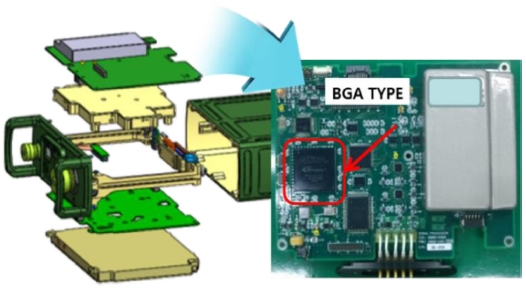
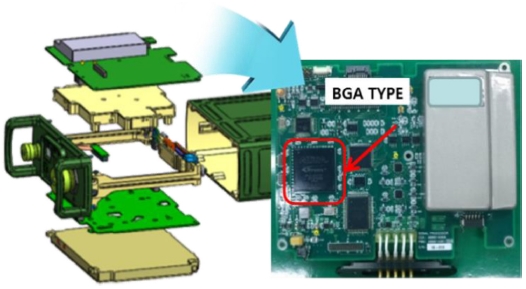
Fig. 19에서 보는 것과 같이 탑재장비는 구성되어 있는데, PCB 구성품 중 가장 부품 크기가 크고 주요한 부품이 탑재된 PCB에 대한 강건성을 확인하였다.
Fig. 19Feature of PCB assembly for the mounting equipment
3.2.1 진동환경에서의 최대허용변위
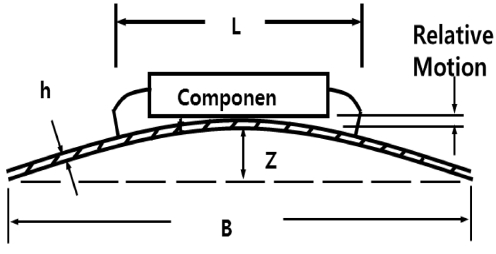
수식 1은 진동환경을 받고 있는 PCB 구성품 위치에 따른 최대허용변위를 나타내는 것으로, 이 변위를 벗어난 경우 부품 파손이 발생할 수 있다는 것을 의미한다.
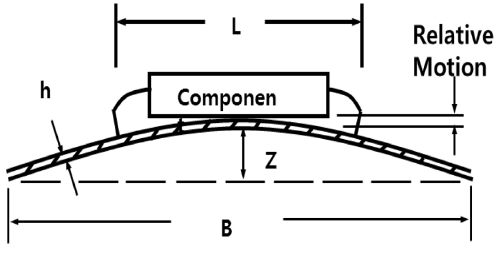
Fig. 20이 나타난 것과 같이
B는 PCB의 길이,
L은 PCB 위에 조립된 구성품의 길이,
h는 PCB의 두께,
r은 PCB 위에 구성품이 조립된 위치에 따른 계수,
C는 PCB 구성품의 형태에 따른 계수를 의미한다.
Fig. 20Relative motion produced between component and PCB
탑재장비의 주요 PCB 구성품 중 BGA 타입의 부품에 대한 최대허용변위는 PCB 실장 위치와 기본 정보를 이용하여 계산할 경우 0.4064 mm를 벗어나면 부품 파손이 일어난다는 것을 의미하며 이 변위 이내에 있으면 실험적으로 20 Million Cycles 시험을 통과한 것으로 대변할 수 있다.
PCB의 고유진동수는 전산해석 및 실험을 통해 확인하였고, 입력되는 진동 값은 MIL-STD-810G Changed를 통해 고유진동수 근방에서의 입력 값을 이용하여 계산하면 5.17 Grms, 그 때 PCB 구성품에서 발생할 수 있는 진동 변위는 0.032 mm로 계산된다.
최대허용 변위가 0.427 mm로 계산되었고, 진동 환경에서 발생할 수 있는 진동 응답이 0.032 mm로 확인하여 PCB 최대허용변위가 실제 PCB 진동 응답보다 약 13.34배 이상 커서 진동환경에서는 안전하다고 할 수 있다.
3.2.2 충격 환경에서의 최대허용변위
충격 환경에서의 PCB 구성품 위치에 대한 최대허용 변위는 실험적으로 나타난 결과를 토대로
식(2)에 나타낼 수 있다.
충격 환경에서 발생할 수 있는 최대허용 변위는 2.56 mm인 것을 확인할 수 있다. 충격이 인가되었을 때의 발생 변위는 0.366 mm로 계산할 수 있으며, 충격에서의 최대허용 변위 대비 7배 이상 커서 충격에서도 안전한 것을 확인할 수 있다.
진동과 충격 환경에서 발생할 수 있는 최대허용변위와 응답변위에 대해서 Steinberg가 제안한 이론을 통해 검토한 결과를
Table 3에 나타냈는데, 전산해석을 통해 계산한 고유진동수와 실험을 통해 측정된 고유진동수를 이용하여 계산을 해보면, 진동 및 충격 결과 모두 최대허용변위보다 실제 응답이 적게 나타나는 것을 확인할 수 있다. 즉 절연기를 제외하여도 현재 설계된 탑재장비의 주요 PCB 구성품은 차륜형 차량에 적용되는 환경규격에서도 부품 손상 없이 운용할 수 있다는 것을 이론적으로 확인할 수 있다. 단, 실제 작전장비에 대한 운용 및 정비 등을 고려하여 무기체계에서 선택적으로 적용할 필요가 있다.
Table 3Comparison of results of displacement at PCB component
Table 3
|
Category |
Comparison of results of displacement at PCB, (unit=mm) |
Max.
displacement |
Resp of disp.
by experiment |
Resp. of disp.
by simulation |
Safety
ratio |
|
Vibration |
0.427 |
0.032 |
0.031 |
13.34/13.78 |
|
Shock |
2.56 |
0.366 |
0.358 |
7.00/7.15 |
4. 결론
본 논문은 MANPAD로 개발된 탑재장비를 운용 환경이 다른 차륜형 차량에 장착하여 운용할 수 있는지에 대한 검토를 진행하였다. 검증 간 개발 초기에 계산된 전산해석 결과와의 차이를 확인하고 전산해석에 대한 신뢰성 검증을 위해 실제 진동 시험을 통해 해석 결과를 검증을 하였다. 개발 초기에 선정된 절연기의 특성을 확인하고자, 절연기 적용 전후 진동 및 충격 응답을 전산해석을 통해 계산하였으며, 절연기 적용에 따른 진동 및 충격 저감을 확인하고 실제 환경시험을 통해 절연 효과를 검증하였으며, 환경시험 후 탑재장비의 성능은 탑재장비 전용 점검장비를 통해 성능 검증하였다.
또한, 절연기를 제외하고도 장비 운용이 가능한지에 대한 이론적 분석을 통해 변경된 환경에서도 탑재장비의 주요 PCB 구성품이 파손 없이 운용될 수 있다는 것을 확인하였다.
ACKNOWLEDGMENTS
This paper was presented at KSPE Autumn Conference 2018
REFERENCES
- 1.
Kim, M. D., Kim, C. J., Jang, D. J., and Lee, S. J., “A Study On the Vibration Isolation for the Mounting Equipment of the Military Wheel Vehicle,” Proc. of Korean Society for Precision Engineering Spring Conference, pp. 329-330, 2017.
- 2.
Kim, M. D., Kim, C. J., and Kim, D. H., “A Study on the Vibration and Shock for the Mounting equipment of the Military Wheel Vehicle,” Proc. of Korean Society for Precision Engineering Spring Conference, pp. 924-924, 2018.
- 3.
Lee, M. C., Cho, K. H., Kim, S. I., and Lee, S. J., “Study on Design and Analysis of Driving System for Identification Friend of Foe,” Proc. of Korean Society for Precision Engineering Spring Conference, pp. 242-242, 2016.
- 4.
- 5.
Irvine, T., “Optimal Use of the Vibration Response Spectrum for Enveloping Random Data,” Proc. of Annual Technical Meeting-Institute of Environmental Sciences and Technology, pp. 296-302, 1999.
- 6.
Lalanne, C., “Mechanical Vibration and Shock Analysis,” John Wiley & Sons, Vol. 2, pp. 51-92, 2010.
- 7.
Department of Defense Test Method Standard, “Environmental Engineering Consideration and Laboratory Test,” Report No. MIL-STD-810G, 2008.
- 8.
Suhir, E., Steinberg, D. S., and Yu, T. X., “Structural Dynamics of Electronic and Photonic Systems,” John Wiley & Sons, 2011.
10.1002/9780470950012
- 9.
Harris, C. M. and Piersol, A. G. “Harris' Shock and Vibration Handbook,” McGraw-Hill, 5th Ed., 2002.
- 10.
Steinberg, D. S., “Vibration Analysis for Electronic Equipment,” John Wiley & Sons, 3rd Ed., 2000.
- 11.
- 12.
- 13.
Kim, H.-B., Seo, H.-S., and Moon, S.-M., “Design and Verification of Satellite Electronic Equipment with the Consideration of Random Vibration while Launching,” Proc. of the Korean Society for Noise and Vibration Engineering Conference, 2000.
- 14.
Jeong, S.-Y., Oh, H.-U., Lee, K.-J., and Kim, B.-S., “Mechanical Stability Analysis of PCB and Component for Launch and On-Orbit Environment Based on Fatigue Failure Theory and FEM,” Journal of the Korean Society for Aeronautical and Space Sciences, Vol. 39, No. 10, pp. 952-958, 2011.
10.5139/JKSAS.2011.39.10.952
Biography
- ManDal Kim
Chief Research Engineer in LIGNEX1. His research interest is Vibration, Shock and Mechanical System Design.
- ChangJin Kim
Senior Research Engineer in LIGNEX1. His research interest is Vibration, Shock of Radar System.
- DongHyeok Kim
Senior Research Engineer in LIGNEX1. His research interest is Vibration, Shock of Shipboard Equipment.