ABSTRACT
Military shelters contain various electronic devices that generate significant heat during operation due to their high power output. This heat buildup can degrade the performance of the equipment and shorten its operational lifespan. In high-temperature environments, overheating can lead to serious malfunctions in communication systems or information management platforms, jeopardizing the efficiency and reliability of military operations. Conversely, in low-temperature or high-humidity conditions, condensation may form inside the shelter, increasing the risk of physical damage to electronic components. Such damage can significantly compromise the reliability and durability of the equipment, raising the likelihood of system failure. This study proposes using various environmental control systems, including heating, ventilation, and air conditioning (HVAC) units and air ducts, to mitigate the adverse effects of temperature and humidity fluctuations within military shelters. To achieve this, thermal analysis models were utilized to evaluate and verify the performance of these systems. The analysis specifically examined the heat output of individual devices to determine if the proposed control systems could effectively maintain optimal operating temperatures within the shelter. The results of this study aim to provide a valuable foundation for designing environmental control systems that ensure thermal stability in military shelters.
-
KEYWORDS: Shelter, Thermal simulation, Air conditioning
-
KEYWORDS: 쉘터, 열해석, 환경조절장치
NOMENCLATURE
fsu = Forward Shelter Unit
bsu = Backward Shelter Unit
γ = Specific Weight
Cp = Specific Heat
1. 서론
현대 군사 작전 환경은 고도로 전자화되고 있으며, 이에 따라 다양한 통신, 감시, 정보처리 장비들이 쉘터 내부에 집적되어 운용되고 있다. 이러한 전자 장비들은 대부분 고출력 기반으로 설계되어 장시간 운용 시 다량의 열을 발생시키며, 이로 인해 군용 쉘터 내부는 열적으로 불안정한 조건에 놓이게 된다. 특히, 외부 환경의 온도 변화와 내부 장비의 발열이 중첩될 경우 쉘터 내부는 고온 상태로 빠르게 진입할 수 있으며, 이는 전자 장비의 성능 저하, 오작동, 수명 단축의 원인이 될 수 있다. 반대로, 혹한기나 고습 환경에서는 내부 응결이 발생하여 전자 부품의 부식이나 단락을 유발할 위험이 존재한다.
이러한 문제로 인해 쉘터 내부의 열 환경을 효과적으로 제어하기 위한 연구가 다수 수행되어 왔다. 태양복사열에 의한 쉘터의 열전달 특성을 분석한 연구에서는 외부 일사량, 쉘터의 재질 및 구조, 내부 온도 변화 등을 종합적으로 고려하여 열적 성능을 평가했다. 특히, 외부 복사열이 쉘터 내부로 전달되는 과정을 정량적으로 분석함으로써, 쉘터 설계 시 열환경 개선을 위한 연구를 수행했다[
1]. 쉘터 운용 환경시험을 위한 열해석 모델의 개발 및 검증에 관한 연구에서는 실제 환경 조건을 모사한 시험 데이터를 바탕으로, 열적 거동을 예측할 수 있는 해석 모델을 구축하고 그 정확성을 검증했다[
2]. 쉘터용 복합재 패널의 이방성 열전도 특성을 수치적으로 분석한 연구에서는 복합재의 방향성 물성이 열전달에 미치는 영향을 정밀하게 모사했다. 특히, 열전도 계수의 방향별 차이를 고려하여 실제 쉘터 구조에서의 열 거동을 예측함으로써, 복합소재 설계 시 열관리 성능 향상을 위한 연구를 수행했다[
3]. 레이더 쉘터 내부의 열원 배치 구조에 따른 온도 분포 변화를 전산 유체 역학(CFD) 기법을 활용하여 분석했다. 열원의 위치 및 배치 방식에 따라 내부 공기 흐름과 온도 편차가 어떻게 달라지는지를 시뮬레이션을 통해 정량적으로 평가하였으며, 이를 통해 효과적인 열관리와 냉각 성능 향상을 위한 최적 배치 방안을 제시했다[
4].
기존 연구들은 대부분 제한된 장비 구성 또는 고정된 환경 조건을 가정하고 있어, 실제 운용 환경에서의 적용 가능성에 한계가 있다. 특히, 쉘터 내부에 탑재되는 전자 장비는 열 발생량이 서로 다르고, 운용 패턴에 따라 발열 분포가 시간적으로도 달라지므로, 이러한 복잡성을 고려하지 않은 열해석은 실제 성능을 제대로 반영하지 못할 수 있다. 또한, 환경조절장치의 적용 효과를 정량적으로 비교 분석한 연구는 드물며, 냉난방장치 외에 Air Duct 등 다양한 조절 요소들의 통합적 평가 역시 충분히 이루어지지 않은 실정이다.
본 연구는 이러한 한계를 극복하고자, 실제 운용 조건을 반영한 열해석 모델을 기반으로 다양한 환경조절장치의 성능을 체계적으로 분석했다. 장비별 발열량을 고려한 시뮬레이션을 통해 쉘터 내부의 온도 및 습도 변화를 정밀하게 예측하였으며, 이를 바탕으로 냉난방장치, 공기순환 덕트 등의 효과를 비교·검증했다. 기존의 단일 장치 중심 또는 정적 환경 설정에 기반한 연구와 달리, 본 연구는 보다 실질적인 열환경 분석과 통합적 설계 방향을 제시하고 있다는 점에서 차별성을 지닌다.
해당 연구에서 대상으로 하고 있는 쉘터의 형상과 제원은
Fig. 1 및
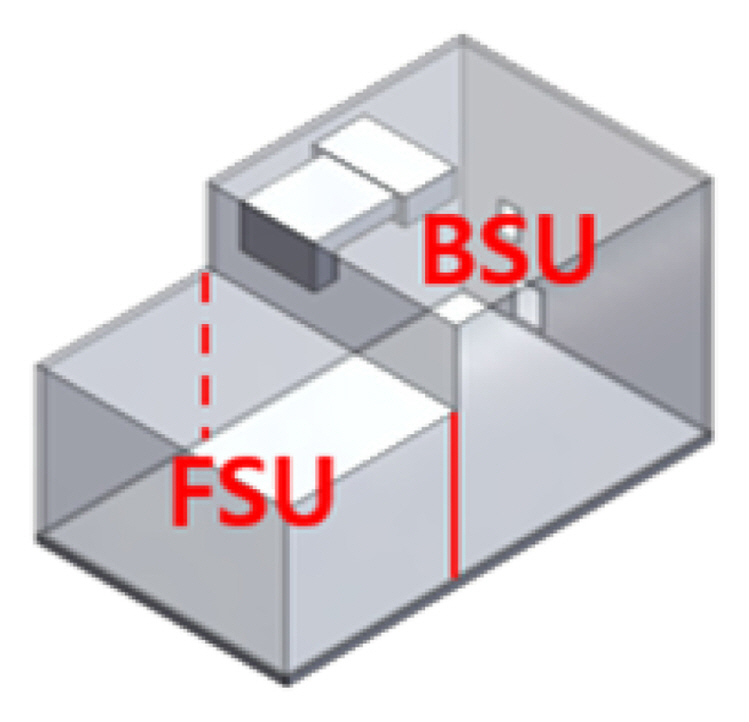
Table 1과 같으며, 전후방 쉘터 사이에 단차가 있는 쉘터로, 전방의 쉘터 영역은 FSU (Forward Shelter Unit), 후방의 쉘터 영역은 BSU (Backward Shelter Unit)로 나뉜다. 쉘터 내 장비들의 고발열을 조절하기 위해 냉난방모듈을 BSU 쉘터 영역에 적용하였으며, 냉난방모듈의 찬 공기 유량이 FSU 영역으로 잘 전달될 수 있도록 Air Duct를 설계 및 효과를 검증하기 위해 본 열해석 연구를 진행했다. 또한 대상 쉘터의 형상 특징에 의한, 쉘터 내부 온도의 안정화 시간을 파악하고 쉘터 운용 온도 유지 여부를 확인 및 열해석 결과와 비교하기 위해 성능시험을 진행했다.
2. 열해석
2.1 해석 개요
해석은 ANSYS ICEPAK을 사용하였으며, Steady 상태에서 해석을 진행했다. 외기 온도는 Solar Radiation 조건을 주지 않았기 때문에, MIL-STD-810G의 High Temperature 온도보다 높은 45
oC를 적용했다. 이와 같은 본 연구의 해석 조건은
Table 2와 같다.
대상 군용 쉘터를 열해석 하기 위해서 우선 모델 단순화 작업을 진행했다.
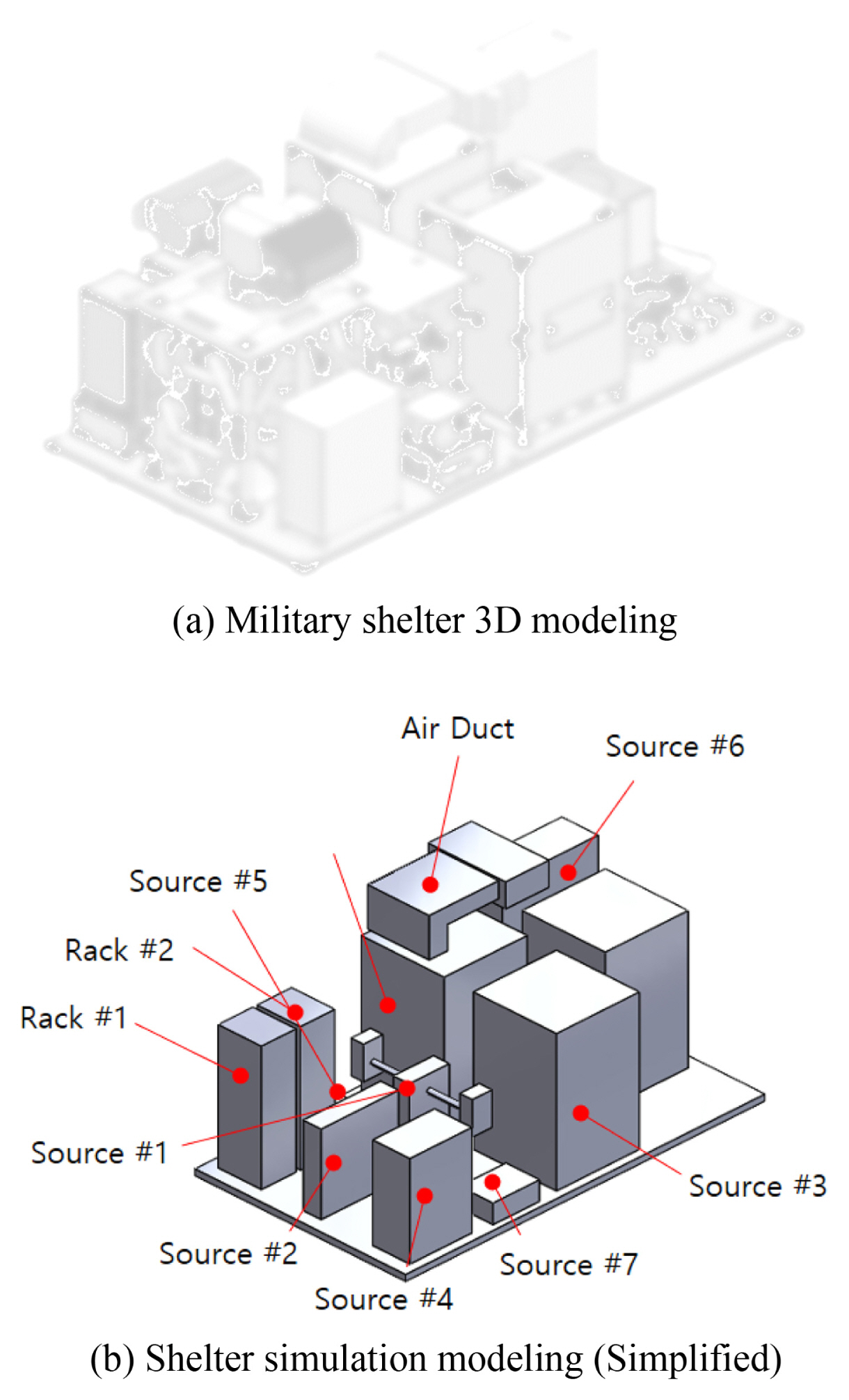
Figs. 2(a)는 기존 쉘터의 3D 모델링을 보여주며, 이를 ANSYS ICEPAK 해석을 진행하기 위해 장치들의 형상 단순화를 진행하여 2 ( b)와 같은 형상으로 해석을 진행했다.
Fig. 2(b)와 같이 대상 쉘터는 발열체인 장비 7대, 랙장치 2대, 케이블조립체를 포함하고 있으며, 환경조절장치인 냉난방모듈 및 Air Duct로 구성되어 있다.
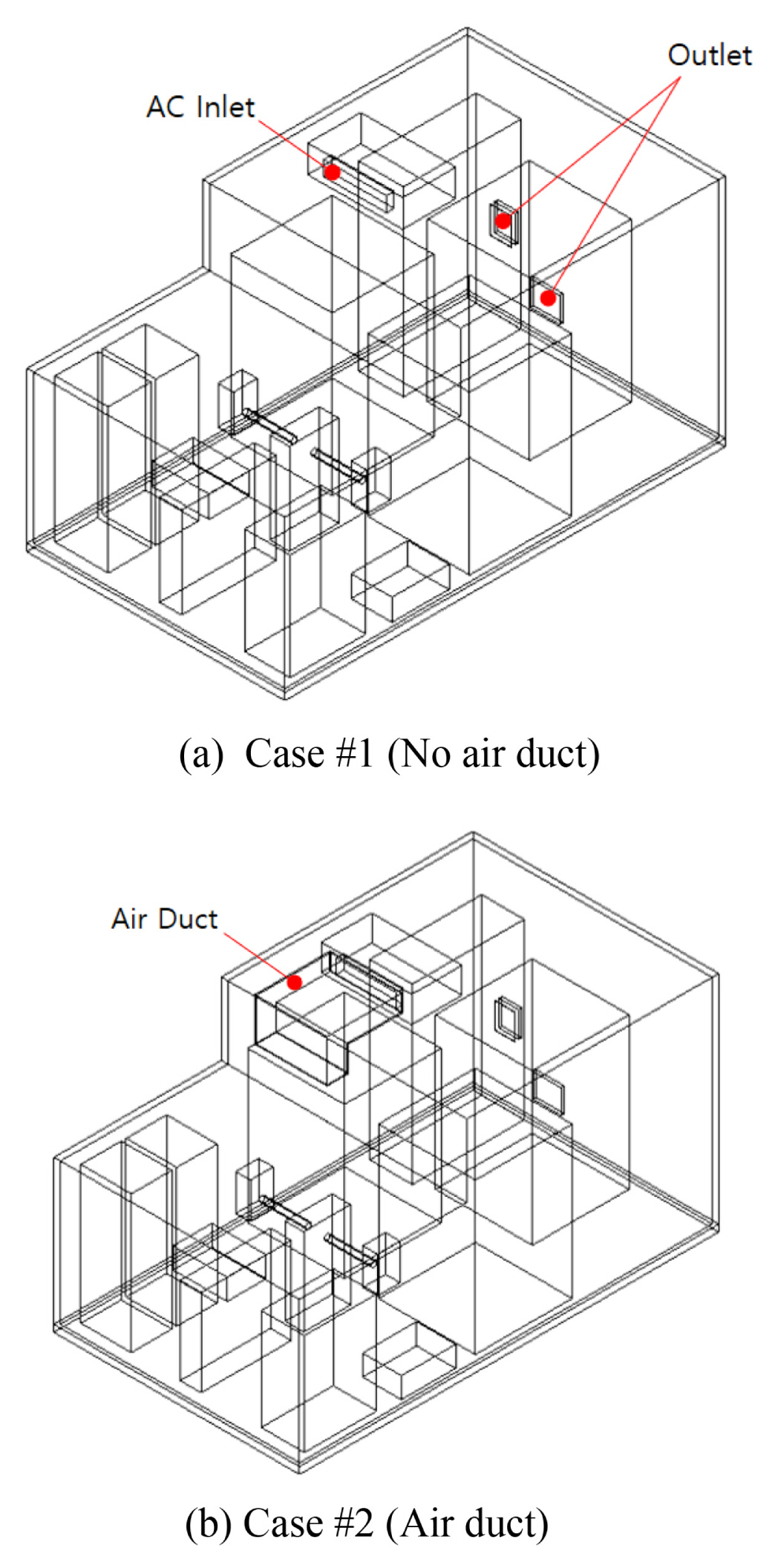
열해석은 Air Duct에 따른 효과를 확인하기 위해 진행했으며, 이에 따른 해석 케이스는 Air Duct의 적용 유무에 따라 2가지로 해석을 진행했다. Case #1은 Air Duct를 적용하지 않은 경우로, 해석 모델의 형상은
Fig. 3(a)와 같다. Case #2은 Air Duct를 적용한 경우로, 해석 모델의 형상은
Fig. 3(b)와 같다.
본 연구에서는 쉘터 내부의 열환경 특성을 평가하기 위한 CFD 해석을 진행했다. 해석의 신뢰성과 실제 운용 환경과의 유사성을 확보하기 위해 다음과 같은 조건을 적용했다.
2.2.1 지배방정식
본 연구의 열유동 해석은 비압축성 정상상태 유동을 가정한 연속방정식 식(1), 운동량방정식 식(2), 에너지방정식 식(3)에 기반한다.
ρ는 공기 밀도(1.2 kg/m³), 는 점성계수(1.8×10⁻⁵ Pa·s), Cp는 비열(1,006 J/kg·K), k는 열전도도(0.026 W/m·K), Q는 내부 발열원을 의미한다. 해당 지배방정식들은 ANSYS ICEPAK의 CFD Solver 내에서 유한체적법(FVM)으로 이산화되어 수치적으로 계산되었다.
2.2.2 쉘터구조체
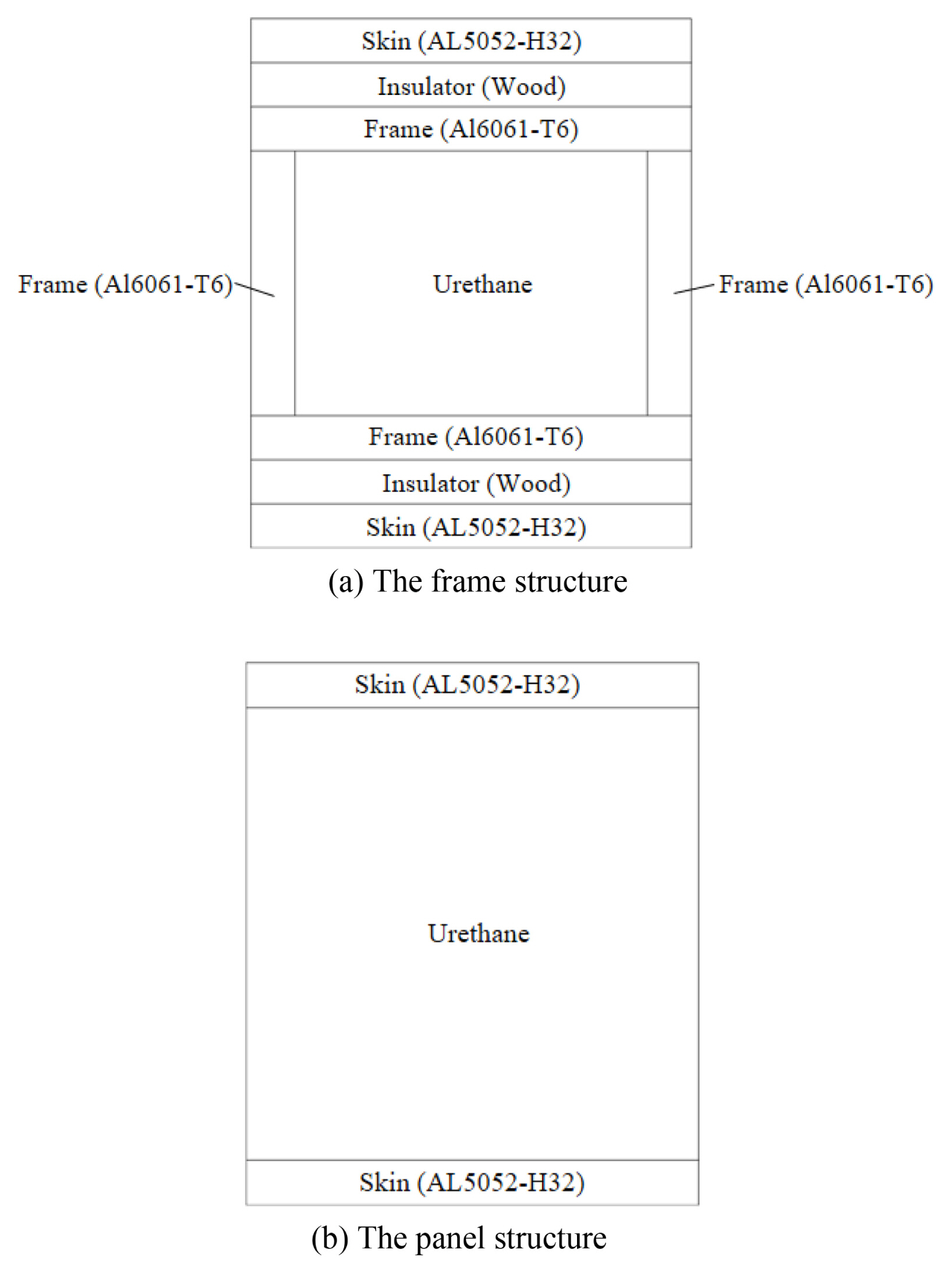
군용쉘터는 단열 성능을 갖춘 우레탄 보온재와 내외부를 감싸는 알루미늄 재질의 스킨으로 이루어진 판넬구조체, 그리고 쉘터의 형태를 유지하고 전체 구조에 강도를 부여하는 프레임구조체로 구성된다. 프레임구조체, 판넬구조체의 구조는
Figs. 4(a) 및 4(b)와 같다. 본 연구에서는 모델을 단순화하기 위해 단열재인 우레탄 재질만을 적용하였으며, 적용한 물성치는 아래
Table 3과 같다.
2.2.3 환경조절장치
쉘터 내 온열환경을 제어하는 환경조절장치는 냉난방모듈(HVAC)과 에어덕트(Air Duct)로 구성되며, 시스템의 제원과 경계 조건은 아래와 같다.
2.2.3.1 냉난방모듈
냉난방모듈은 정격 냉방 용량이 14.5 kW인 상용 제품을 사용했으며, 제원은
Table 4와 같다.
해석에서 필요한 냉난방모듈의 유입 경계조건은 유속과 토출구 온도이다. 유속은 송풍량을 기반으로 값을 산출했으며, 토출구 온도는 열전달 식(4)에서 냉방용량을 역산하여 계산했다. 계산된 값은
Table 5와 같다. 공기 출구는 압력 기준 0 Pa로 설정된 대기 경계조건으로 지정되었다.
2.2.3.2 Air Duct
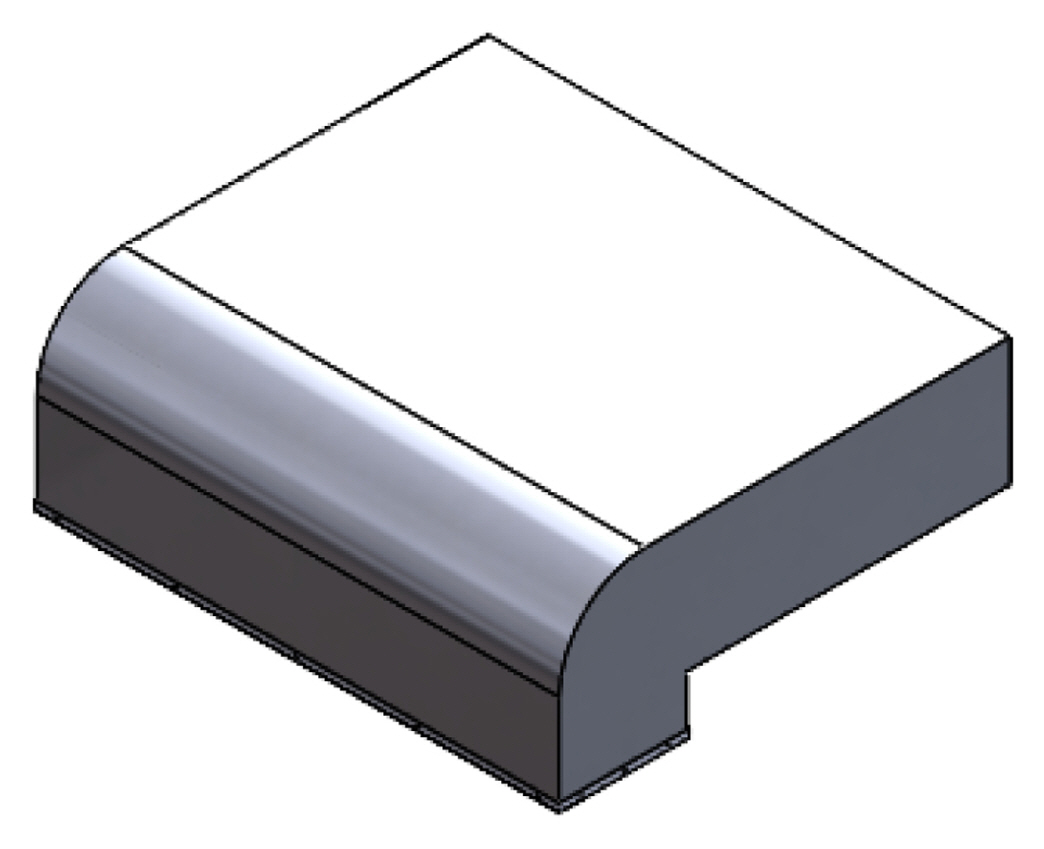
Air Duct는 BSU에 있는 냉난방모듈의 찬공기 유량이 FSU 영역으로 공급이 원활하게 진행될 수 있도록 설계가 검토되었다. Air Duct의 형상은
Fig. 5와 같으며, 쉘터 내 BSU, FSU 영역 사이의 단차로 인하여 물리적으로 제한된 공간 내에 설계가 진행되었다. 이에 따른 Air Duct의 제원은
Table 6과 같다.
2.2.4 장비 발열량
실제 운용 환경을 모사하기 위해, 쉘터 내부에 설치된 전자장비 및 운용 시스템에서 발생하는 발열량을 발열원으로 모델링했다. 각 장비의 발열량은 정격 소비전력을 기반으로 하여 계산되었으며, 발열량은 고정 열원으로
Table 7과 같이 적용했다.
발열 장비는 쉘터 내 실제 설치 위치를 반영하여 모델에 배치되었으며, 이로 인해 발생하는 온도 구배 및 열축적 현상이 해석 결과에 반영되도록 설정했다.
3. 열유동 해석 결과
3.1 해석 결과(Case #1)
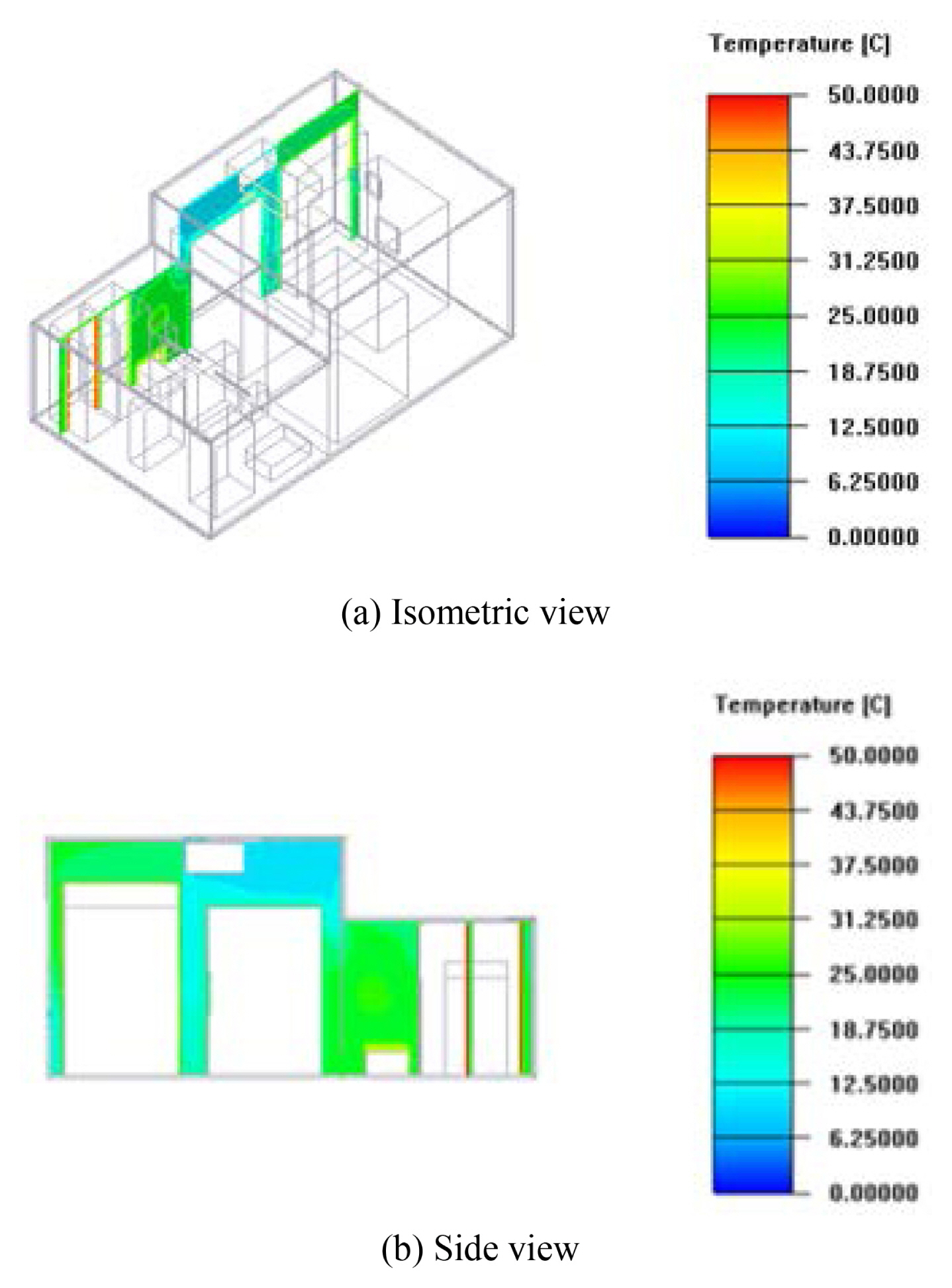
Case #1에서는 Air Duct를 적용하지 않은 쉘터 열해석 결과를 확인했다. 전체쉘터 내 공기 평균 온도는 32.1
oC이며, FSU 영역은 43.5
oC, BSU 영역은 25.4
oC인 것을 확인할 수 있었다. Case #1의 쉘터 내 공기 온도는
Fig. 6과 같다.
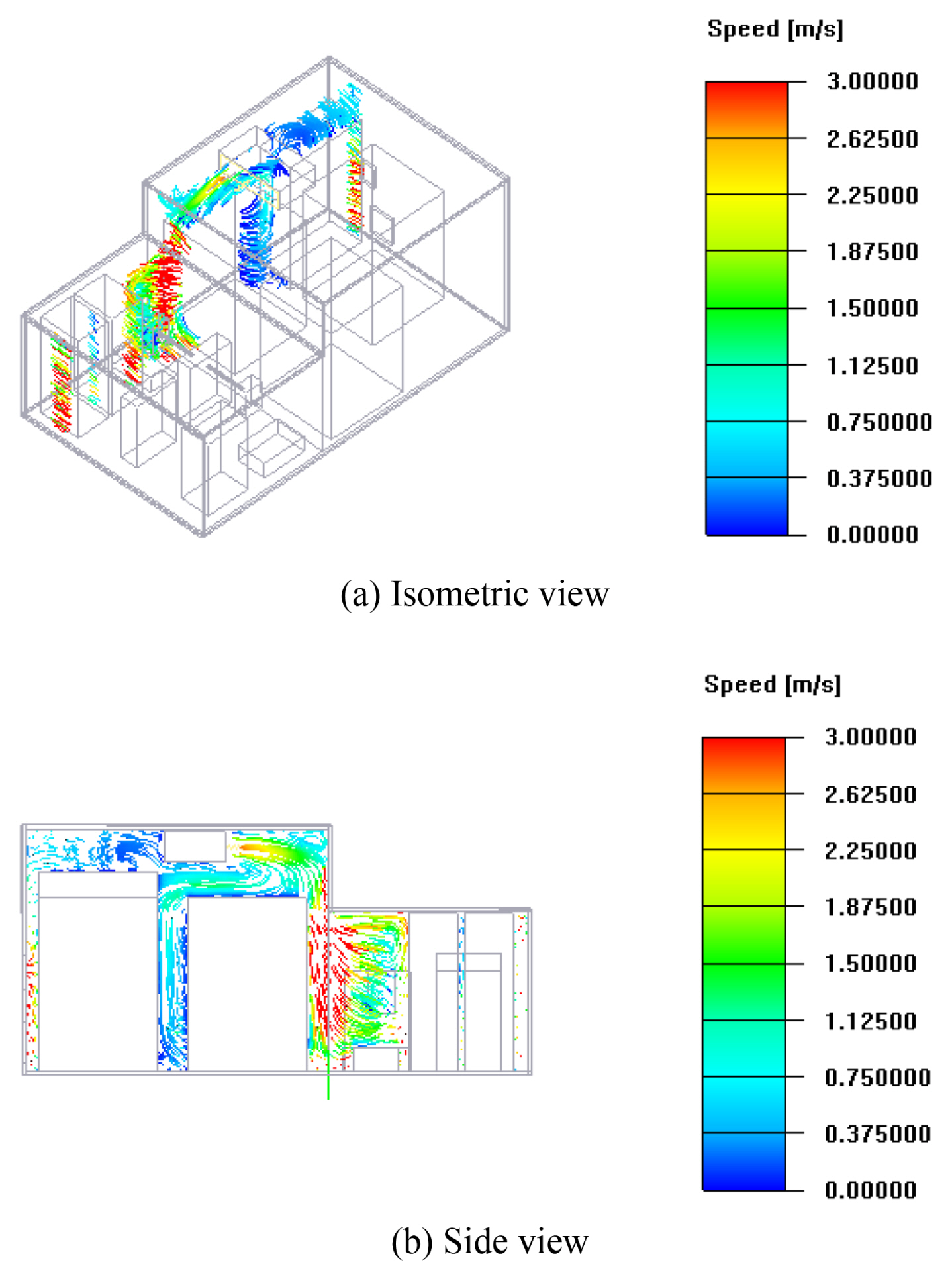
Case #1의 유속 결과는
Fig. 7과 같다. 대상 쉘터의 특징인 단차가 있는 형상으로 인하여 BSU 영역에 있는 냉난방모듈의 찬공기 유량이 FSU 영역까지 전달이 어려운 것을 확인할 수 있었다.
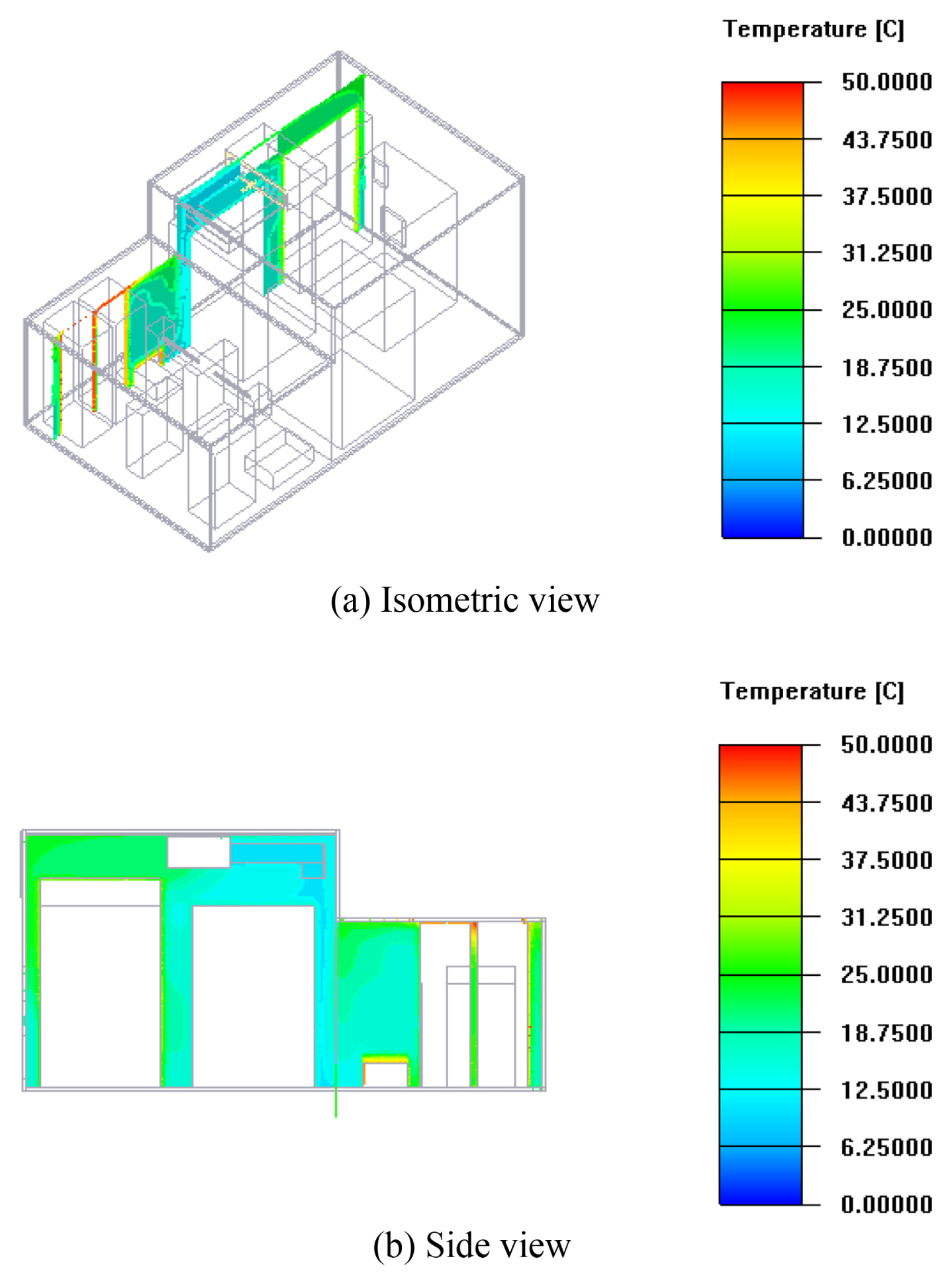
Case #2에서는 Air Duct를 적용하여 쉘터 열해석 결과를 확인했다. 전체쉘터 내 공기 평균 온도는 27.2
oC이며, FSU 영역은 33.0
oC, BSU 영역은 23.8
oC인 것을 확인할 수 있었다. Case #2의 쉘터 내 공기 온도는
Fig. 8과 같다.
Case #2의 유속 결과는
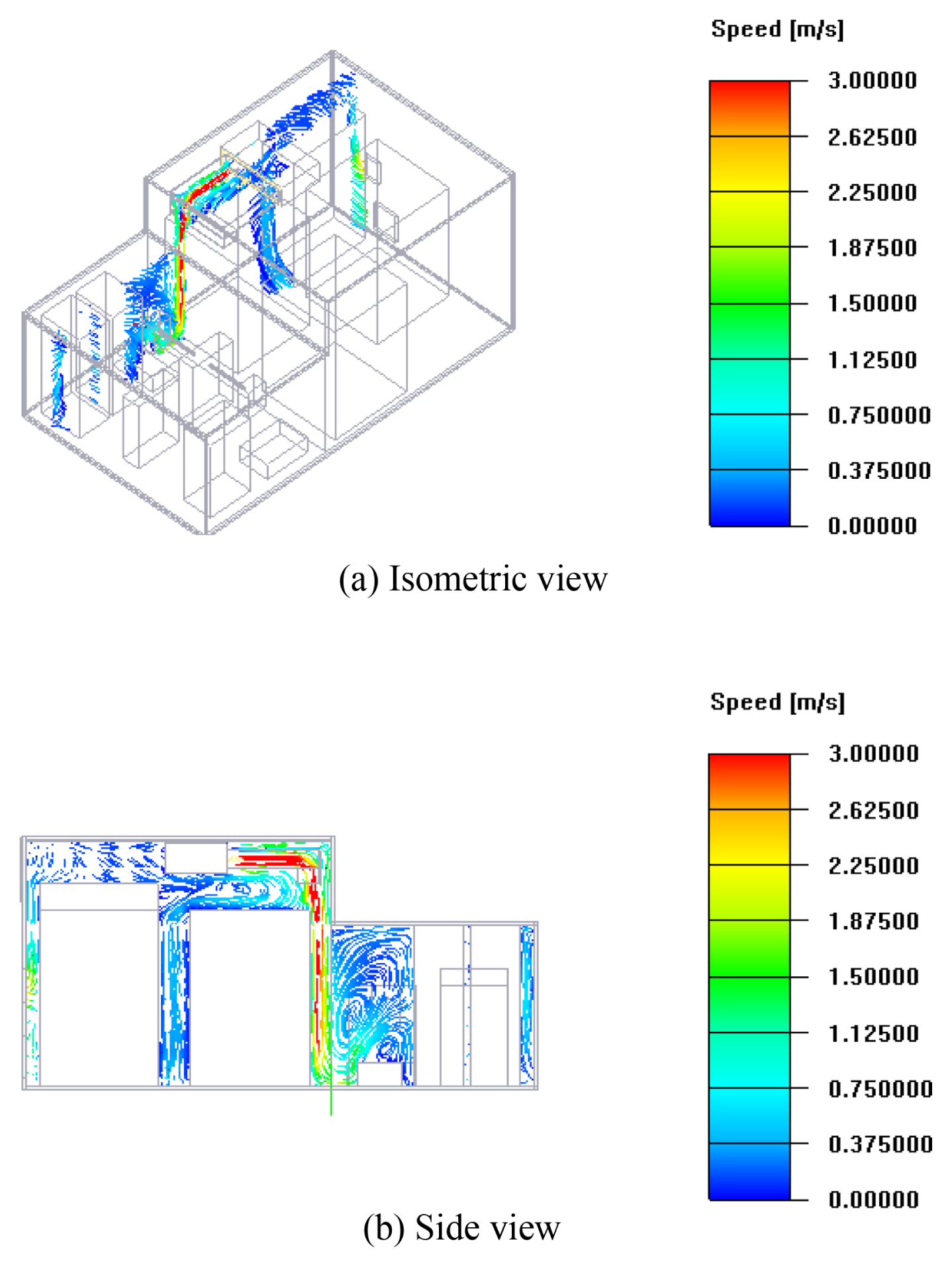
Fig 9와 같다. Air Duct 적용에 따라서 Case #1에 비해 찬공기 유량이 FSU 영역으로 전달이 원활한 것을 확인할 수 있었다.
Case #1과 #2의 쉘터 내 평균 공기 온도 결과를 영역별 및 전체 쉘터로 확인했으며, 결과값은
Table 8과 같다. Air Duct 적용에 따라서 BSU 영역에서 FSU 영역으로 찬 공기 유량 전달을 확인했다. Air Duct 적용 시 쉘터 평균 온도는 32.1
oC에서 27.2
oC로 15% 떨어졌는데, 이는 냉방용량이 동일하더라도 덕트 내부 유량 분포가 개선되어 FSU로의 냉기 공급이 효율화 되었기 때문이다. 실제 해석 결과, Air Duct 적용 시 FSU 영역 내 평균 유속은 0.18에서 0.41 m/s로 약 2.3배 증가하였으며, 냉기 체류시간 감소로 인한 열교환 효율 향상이 전체 평균 온도 강하로 이어졌다.
FSU 영역은 약 24%, BSU 영역은 6.3%로 온도가 떨어져 효과를 확인했다. 또한, 에어덕트 적용에 따라서 전체 쉘터 평균 온도가 30oC 이내로 확인되어, 쉘터 및 장비 운용 온도를 유지하는 것을 확인했다.
4. 환경조절장치 성능시험
본 성능시험은 대상 쉘터의 구조적 특성과 운용 환경을 고려하여, 쉘터 내부 공기 평균 온도의 안정화 시간 및 설정된 운용 온도 범위(10-30oC)의 유지 가능 여부를 확인하기 위한 목적으로 수행되었다.
4.1 성능시험 개요
시험 대상 쉘터는 대형 구조로, 내부는 FSU 및 BSU 영역 간의 단차가 존재하여 열 분포의 균일성에 영향을 줄 수 있는 구조적 특성을 가지고 있다. 이에 따라, 환경조절장치를 이용한 냉난방 운용 시 각 영역 간의 온도 안정화 경향과 설정 온도 도달에 소요되는 시간, 그리고 해당 온도가 지속적으로 유지되는지를 평가하는 것이 본 시험의 주요 목표이다.
시험은 쉘터 내 발열체 및 기타 내부 장비들을 작동하지 않은 상태에서 실시되었으며, 외기 온도가 낮은 조건에서 난방 운용을 중심으로 수행되었다. 온도 측정은 디지털 온습도계를 활용하여, 쉘터 내부 주요 위치에 설치된 센서들을 통해 데이터를 수집했다. 평균 온도의 안정화 여부는 MIL-STD-810G 기준에 따라 설정 온도 대비 ±3oC 이내로 유지되는 경우를 기준으로 판정했다. 이를 통해 쉘터의 열 환경 제어 시스템이 실제 운용 환경에서 요구되는 성능을 충족하는지를 객관적으로 검증하고자 했다.
4.2 성능시험 절차
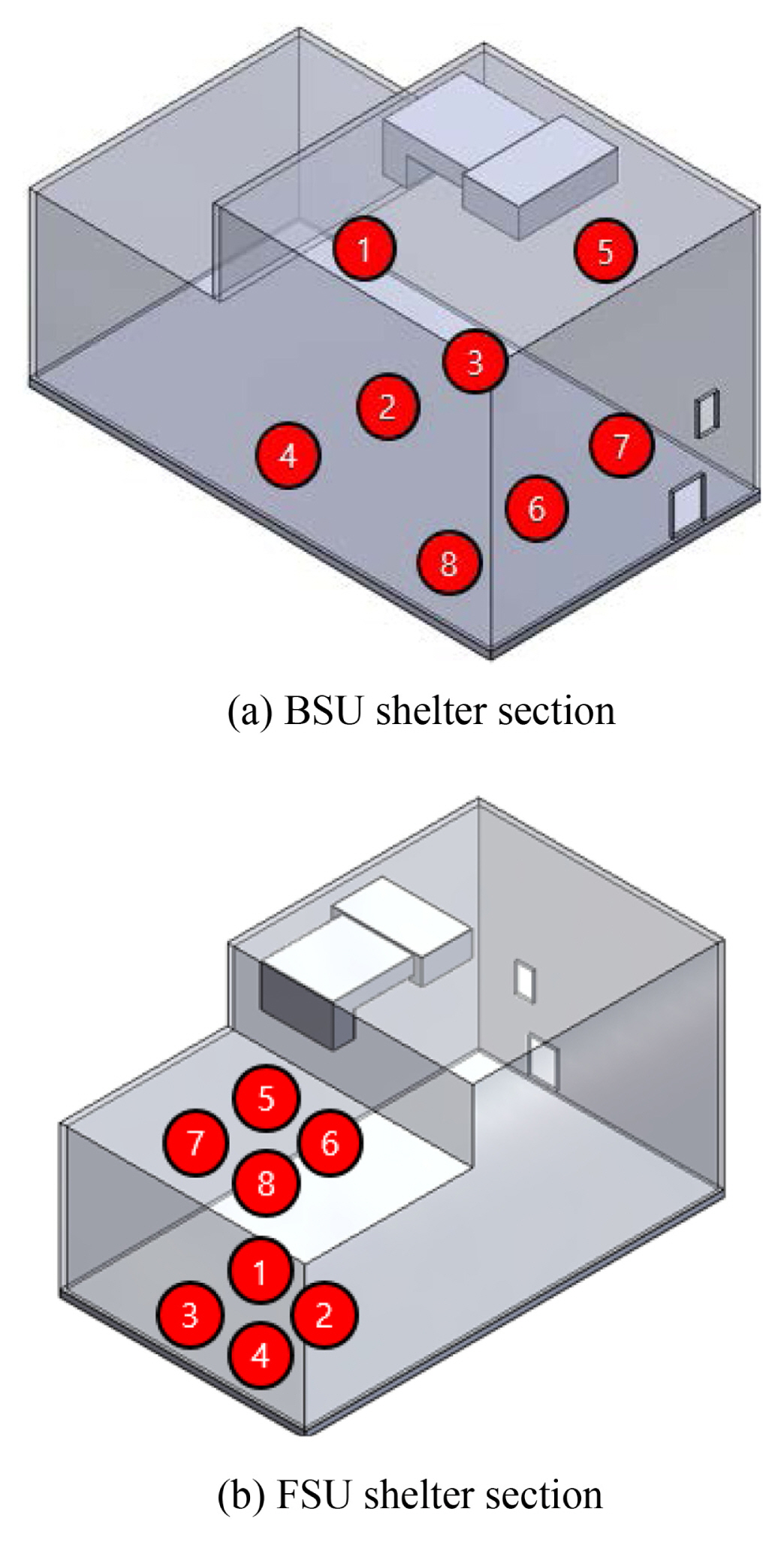
성능시험은 쉘터 내부의 온도 안정화 특성을 정량적으로 분석하기 위하여 정해진 절차에 따라 수행했다. 먼저, 온도 분포의 공간적 특성을 고려하여 쉘터 내부의 BSU 및 FSU 영역 각각에 대해 상·하, 좌·우를 포함한 총 8개 지점에 온도 센서를 설치했다. 이는 쉘터 전체의 평균 온도를 정확하게 산출하고, 영역별 편차를 확인하기 위함이다. 센서 설치 위치는
Fig. 10과 같다.
센서 설치가 완료된 후, 환경조절장치를 이용하여 쉘터 내부 온도를 목표 설정값인 20oC로 조정했다. 이후, 쉘터 내부 공기의 온도 안정화 여부를 판단하기 위한 감시를 실시했다. 온도 안정화 기준은 MIL-STD-810G 규정에 따라 쉘터 내 측정된 평균 온도가 설정값의 ±3oC 범위 내에 도달하는지를 기준으로 삼았다.
온도 안정화가 확인된 이후에는 개별 측정 지점별 온도 값이 기준 범위 내에 위치하는지를 검토했다. 이를 통해 단순히 평균 온도의 안정화 여부뿐 아니라, 공간적 열 분포의 균일성 또한 함께 평가했다. 이러한 절차를 통해 쉘터의 환경 제어 시스템이 실질적인 운용 조건에서 요구되는 성능을 만족하는지 종합적으로 판단했다.
4.3 성능시험 결과
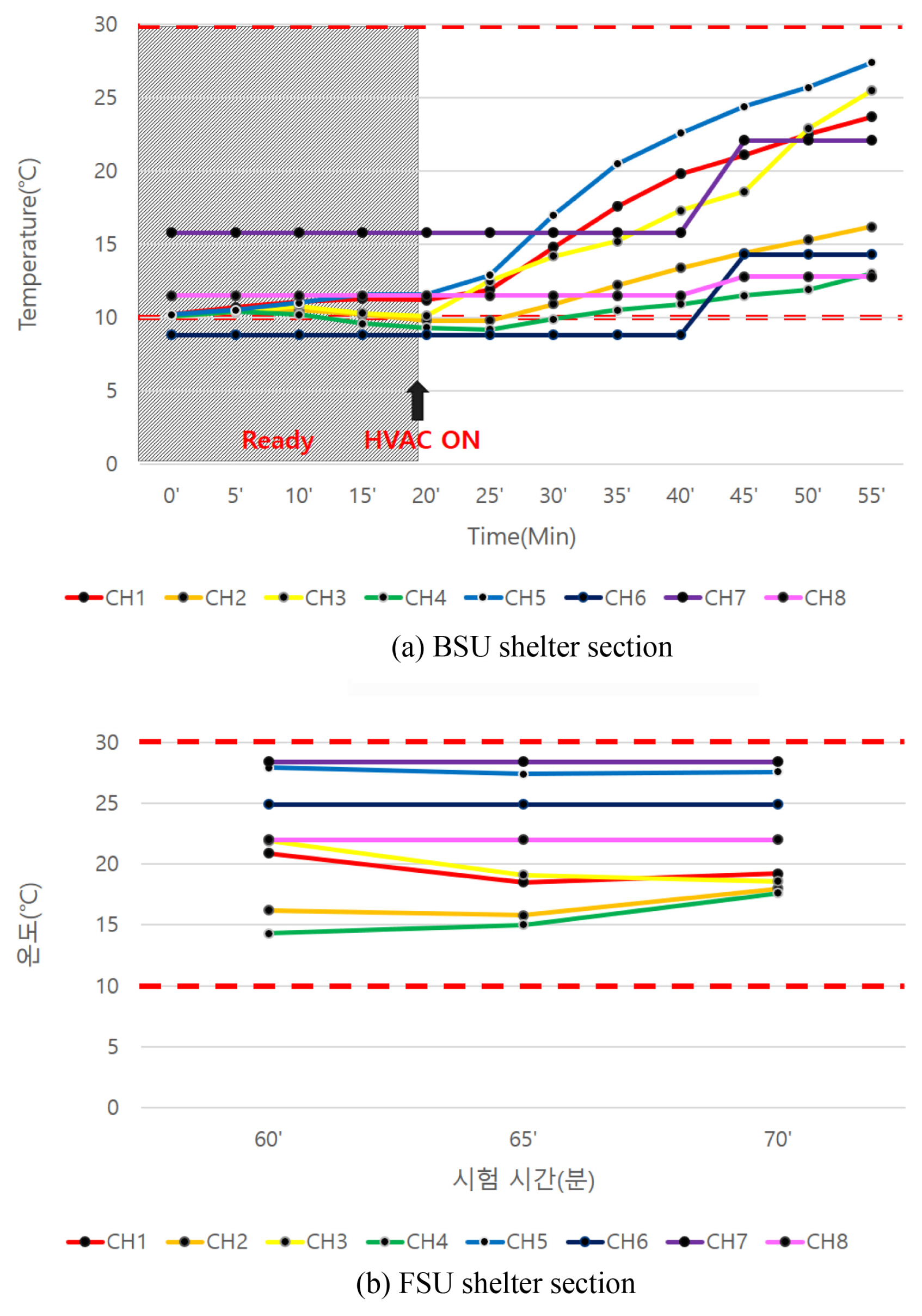
본 시험을 통해 대상 쉘터의 환경조절장치가 운용 온도 범위인 10
oC에서 30
oC 사이를 안정적으로 유지할 수 있음을
Fig. 11과 같이 확인했다. 특히, 성능시험 간에 운용 온도 조건 하에서 쉘터 내부 평균 온도는 MIL-STD-810G에서 제시하는 안정화 기준(±3
oC 이내)에 부합하는 범위로 수렴되었으며, 개별 측정 지점들 또한 모두 기준 온도 범위 내에 포함되어 온도 분포의 공간적 균일성 역시 양호한 수준으로 판단된다.
또한,
Fig. 11(b)에서 볼 수 있듯이 FSU 영역으로의 유량 전달이 효과적으로 이루어졌으며, 이를 통해 Air Duct 시스템의 기능적 효과가 입증되었다. 이는 쉘터 내부 구조적 단차로 인한 공기 흐름 제어에 있어 Air Duct가 실질적인 역할을 수행하고 있음을 시사한다.
한편 BSU 섹션에서는 센서 위치에 따라 시간에 따른 온도 변화가 상대적으로 크게 관측되었다. 이는 난방 운전 시 공기 순환이 초기 단계에서 제한되고, 난류가 형성되기 쉬운 구조적 요인으로 인해 난방 공기의 도달이 약 5-7분 지연된 데 기인한다. 더불어 BSU 상부 프레임의 높은 열용량( Cp = 8 80 J /kg·K)과 열전도율(k = 138 W/m·K)은 약 240-260초 수준의 열관성(Time Lag)을 유발하여, CH7에서 관측된 초기 온도 상승 및 약 40분 이후의 급격한 온도 수렴 패턴과 일치하는 위상 지연을 초래한 것으로 분석된다. 난방 운전 약 30분 이후에는 Air Duct 내부 정압이 안정화되며 유량 분포가 재정렬되어, BSU 상-하부 온도 편차가 2.6oC에서 1.1oC로 감소하였고 이에 따라 CH7의 온도도 빠르게 안정화되는 경향을 보였다.
다만, 본 시험은 쉘터 내 발열체 등 장비를 작동시키지 않은 상태에서 수행되었기 때문에, 실제 운용 조건을 보다 정밀하게 반영하기 위해서는 장비 작동 조건 하에서 동일한 시험을 수행하고, 이를 기반으로 한 열해석 결과와의 상호 비교 및 검증이 추가로 필요할 것으로 판단된다. 이러한 후속 시험을 통해 쉘터 열환경 제어의 신뢰성을 더욱 정밀하게 확보할 수 있을 것으로 기대된다.
5. 결론
본 연구는 대형 쉘터 내 환경조절장치의 성능을 정량적으로 평가하고, 열해석 기법을 병행하여 Air Duct 시스템의 효과를 분석함으로써 쉘터 열환경 제어의 효율성을 종합적으로 검토하고자 했다. 열해석 결과를 통해 내부 장비의 발열 특성과 Air Duct 유무에 따른 쉘터 내 온도 분포의 변화 양상을 확인하였으며, 특히 Air Duct가 적용된 경우 쉘터 전체 평균 온도는 약 15% 감소하고, 찬공기가 집중 유입되는 FSU 영역의 온도는 약 24% 까지 저하되는 효과가 있는 것으로 분석되었다. 이는 Air Duct가 쉘터 내부의 열 불균형 해소에 있어 핵심적인 역할을 수행할 수 있음을 시사한다.
더불어 환경조절장치를 활용한 실증적 성능시험을 통해, 설정 온도에 대한 내부 공기의 안정화 시간과 운용 온도 범위(10-30oC) 유지 여부를 확인하였으며, MIL-STD-810G 기준에 따른 평균 온도 안정성 또한 만족하는 것으로 나타났다. 실험 결과를 통해 Air Duct 시스템이 FSU 영역을 포함한 공간 전반의 온도 제어에 기여하고 있음을 실증적으로 입증할 수 있었다.
한편, 본 시험은 쉘터 내 장비가 비작동 상태에서 진행되었기 때문에, 실제 운용 조건에서 발생하는 복합적인 열 환경을 보다 정밀하게 재현하기 위해서는 장비 작동 하의 추가적인 성능시험과 열해석 간 비교·검증이 필요하다. 향후 본 연구의 연장선상에서 이러한 후속 연구가 수행된다면, 쉘터 환경 제어 시스템의 설계 최적화 및 운용 신뢰성 확보에 기여할 수 있을 것으로 기대된다.
Fig. 13D model of the military shelter
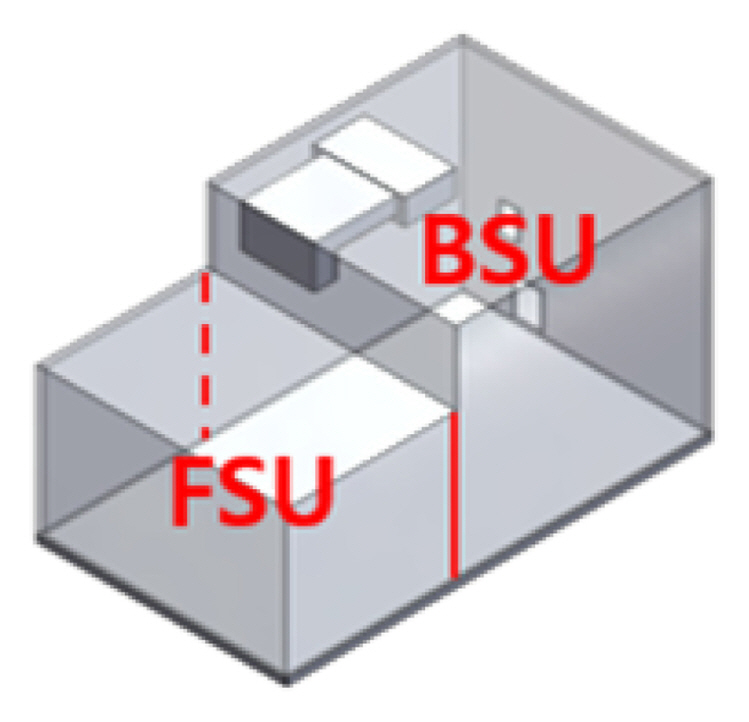
Fig. 2Military shelter modeling comparison with simplified simulation modeling
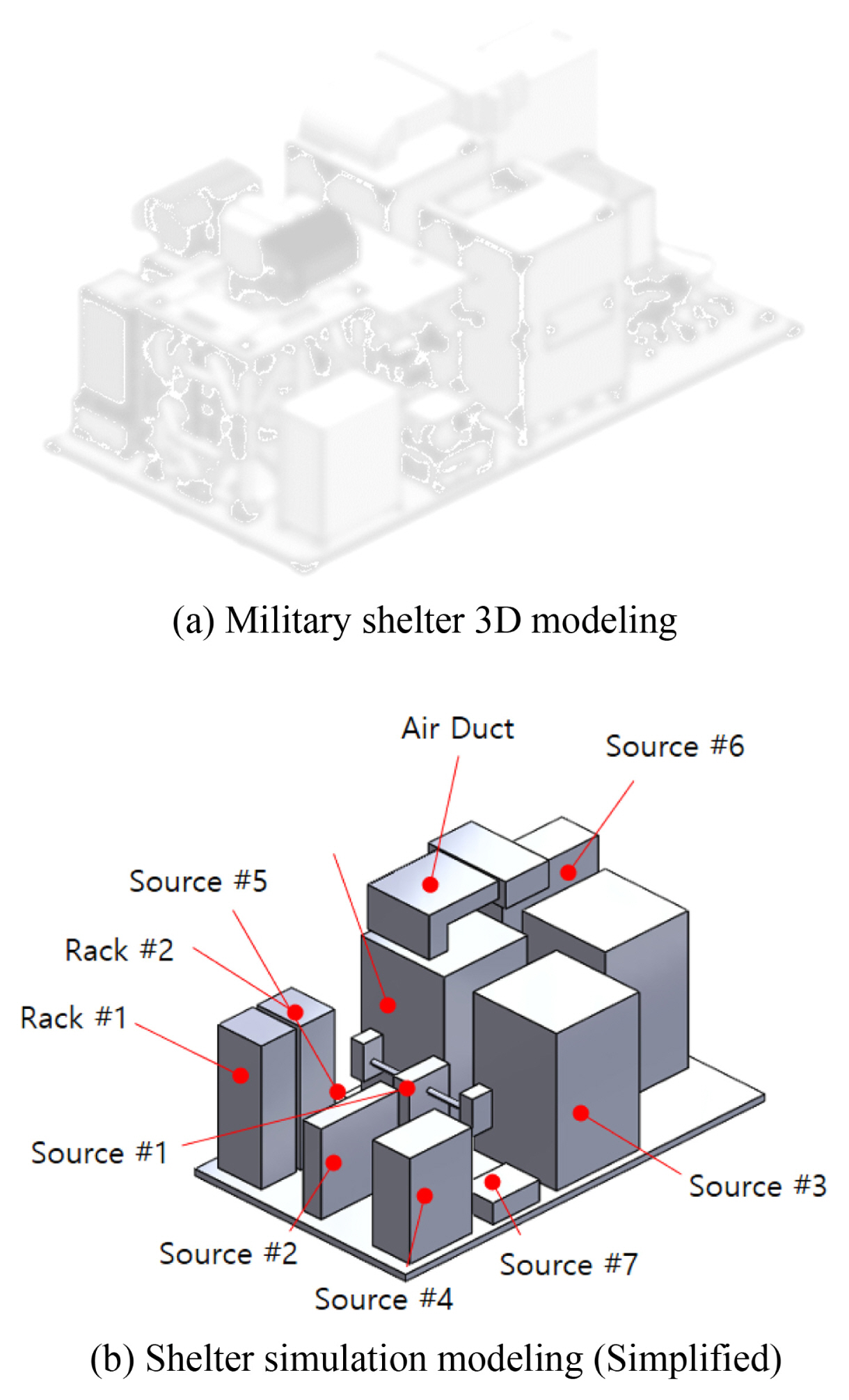
Fig. 3Simulation condition modeling comparison
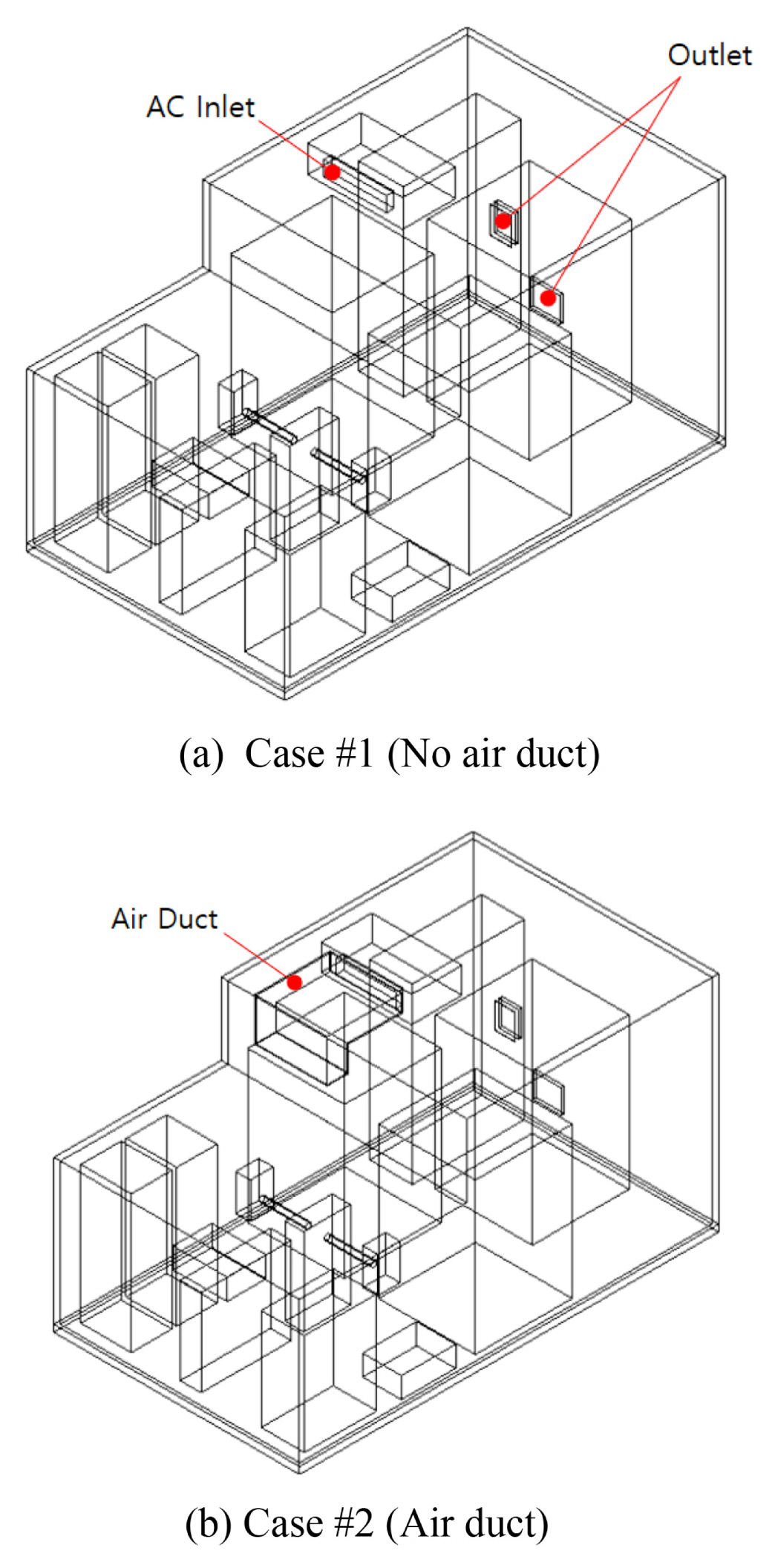
Fig. 4The frame and panel structure
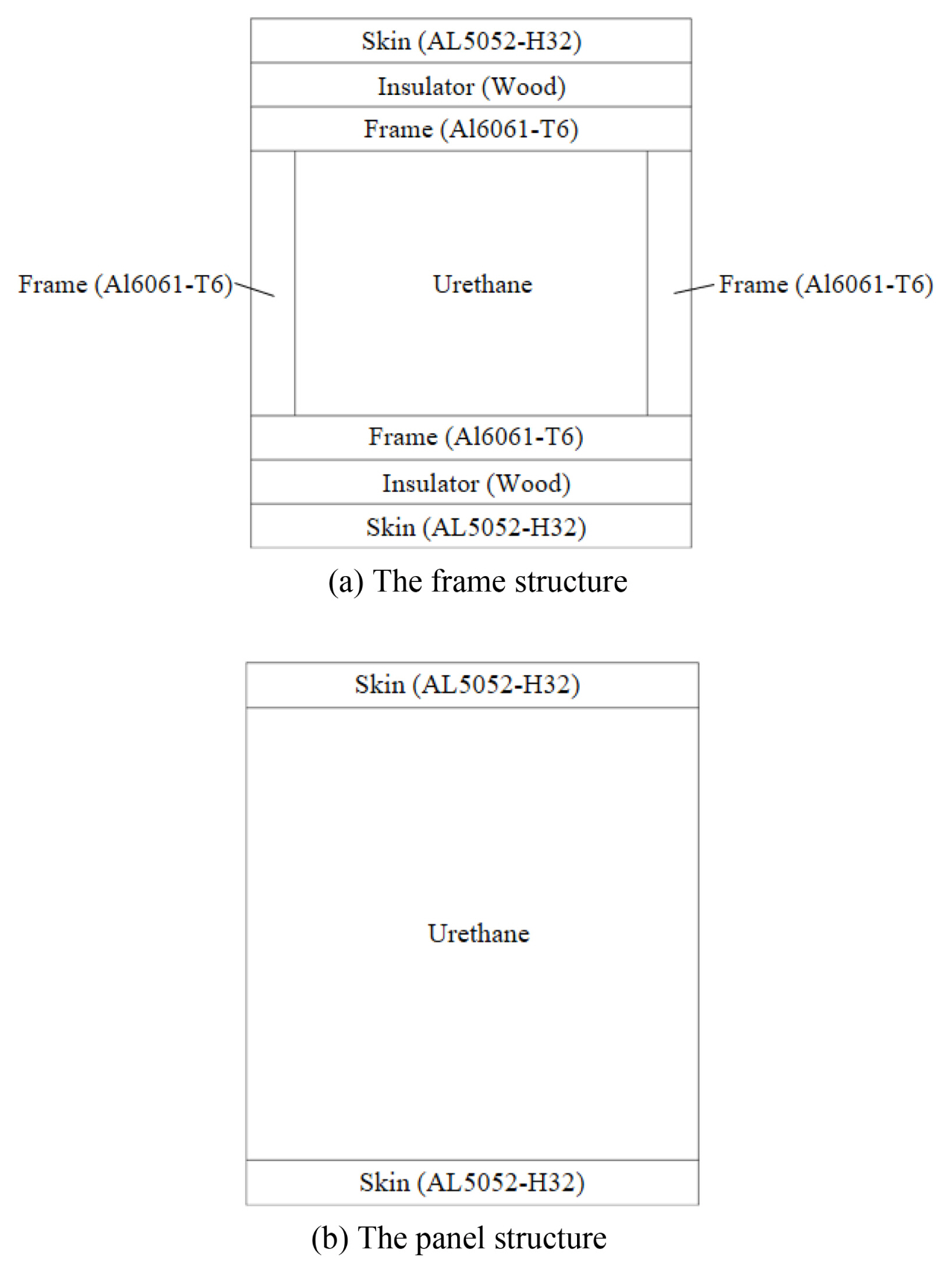
Fig. 5
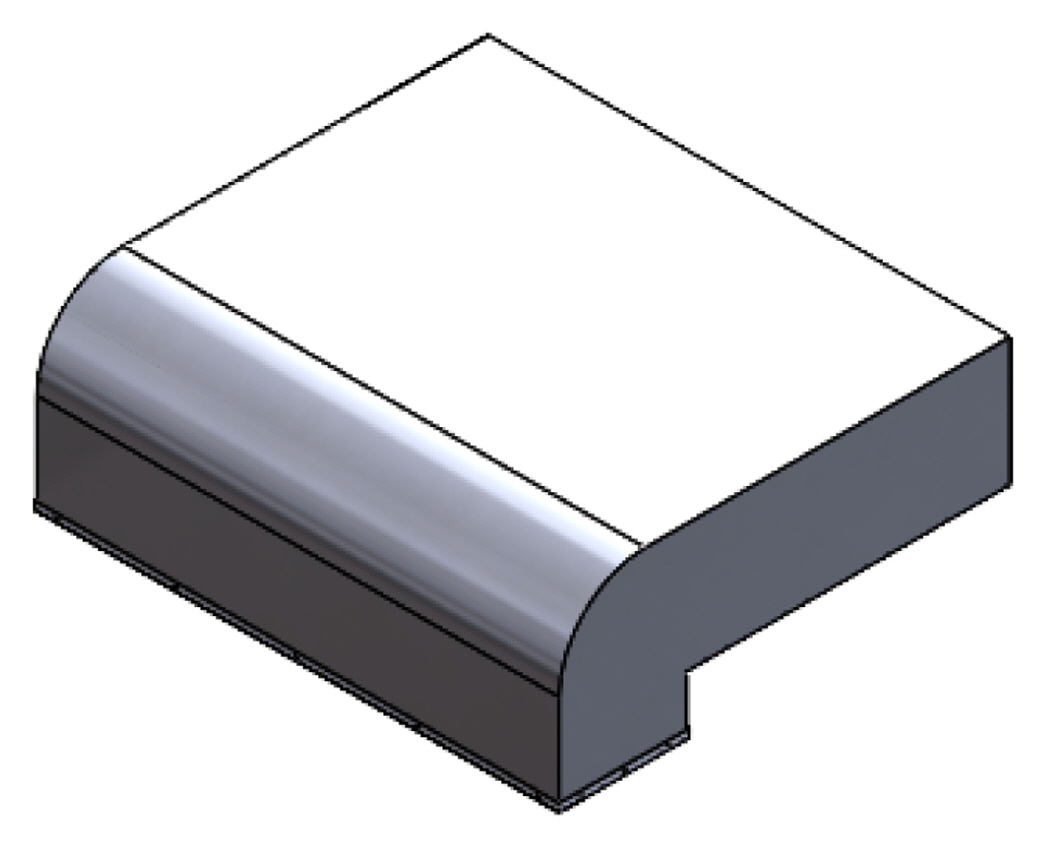
Fig. 6Simulation result of Case #1 temperature
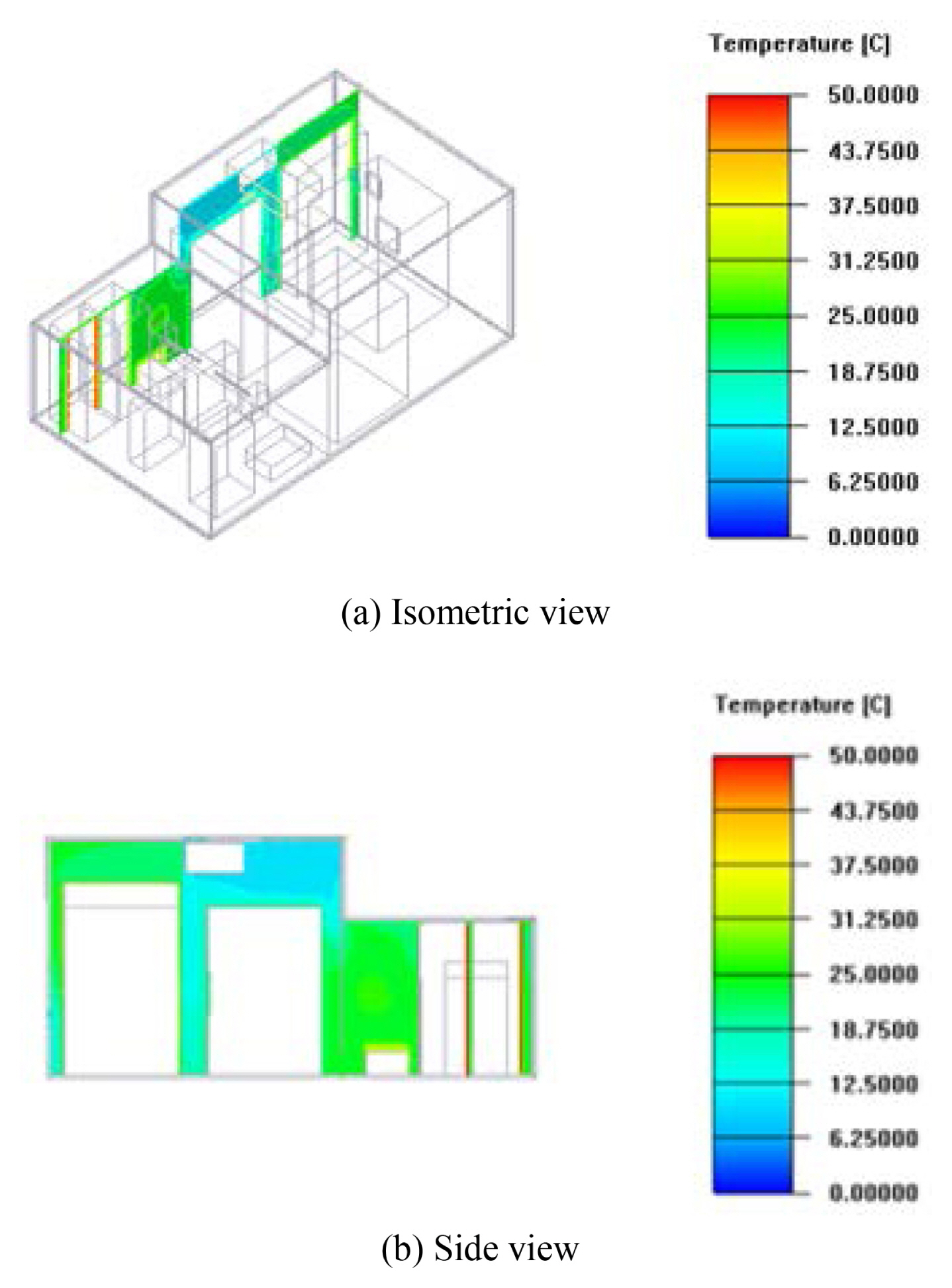
Fig. 7Simulation result of Case #1 flow velocity
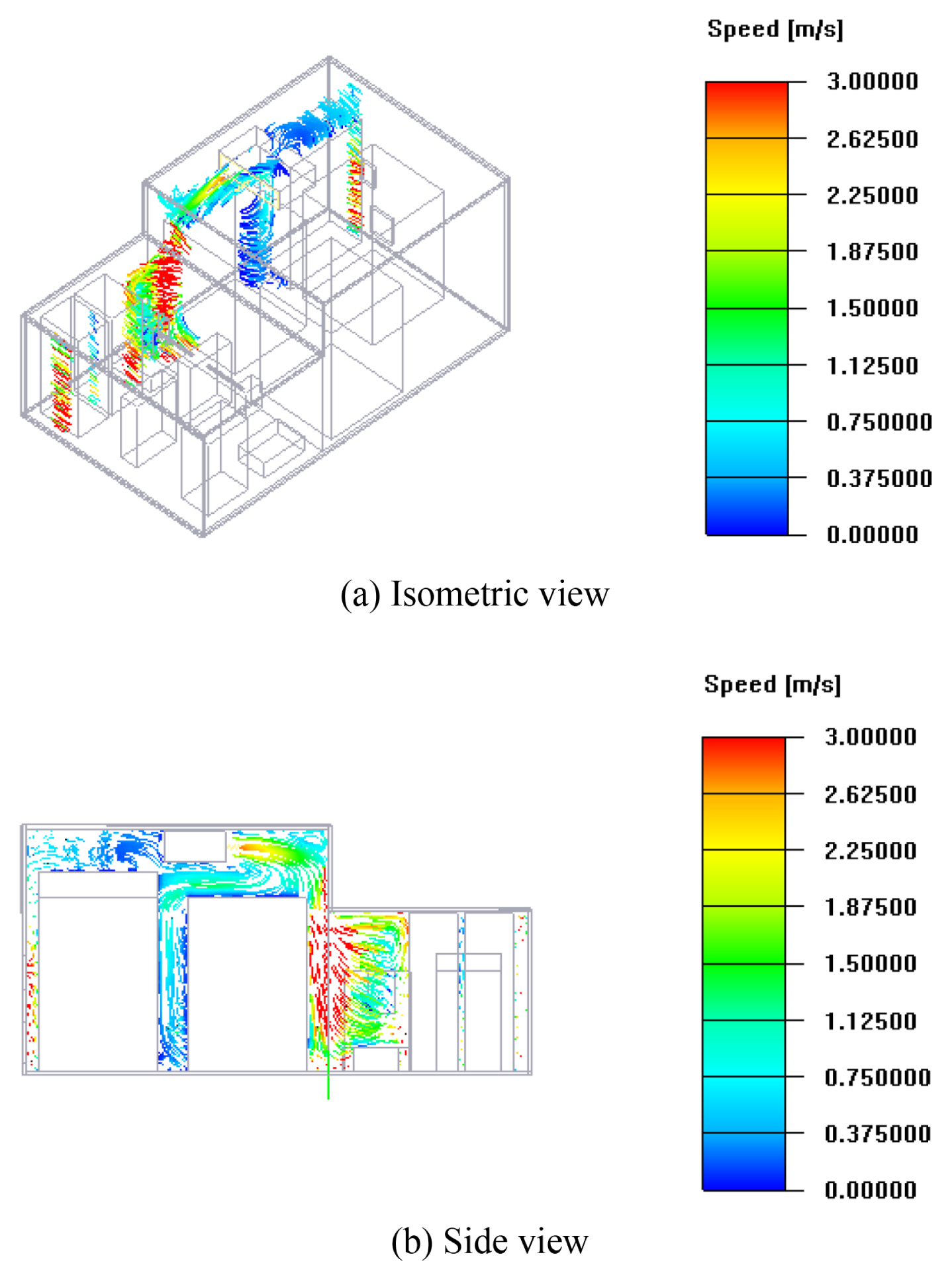
Fig. 8Simulation result of Case #2 temperature
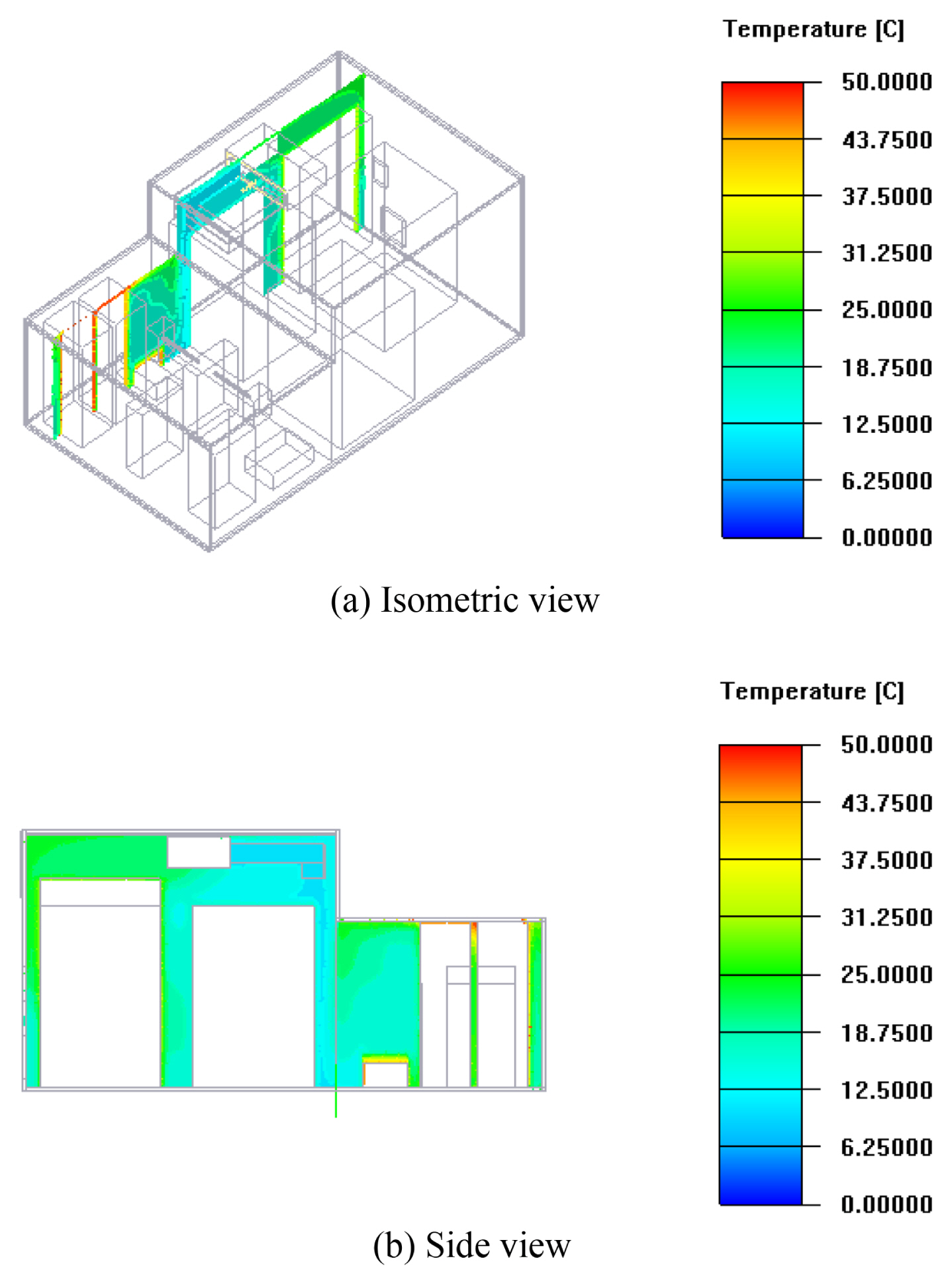
Fig. 9Simulation result of Case #2 flow velocity
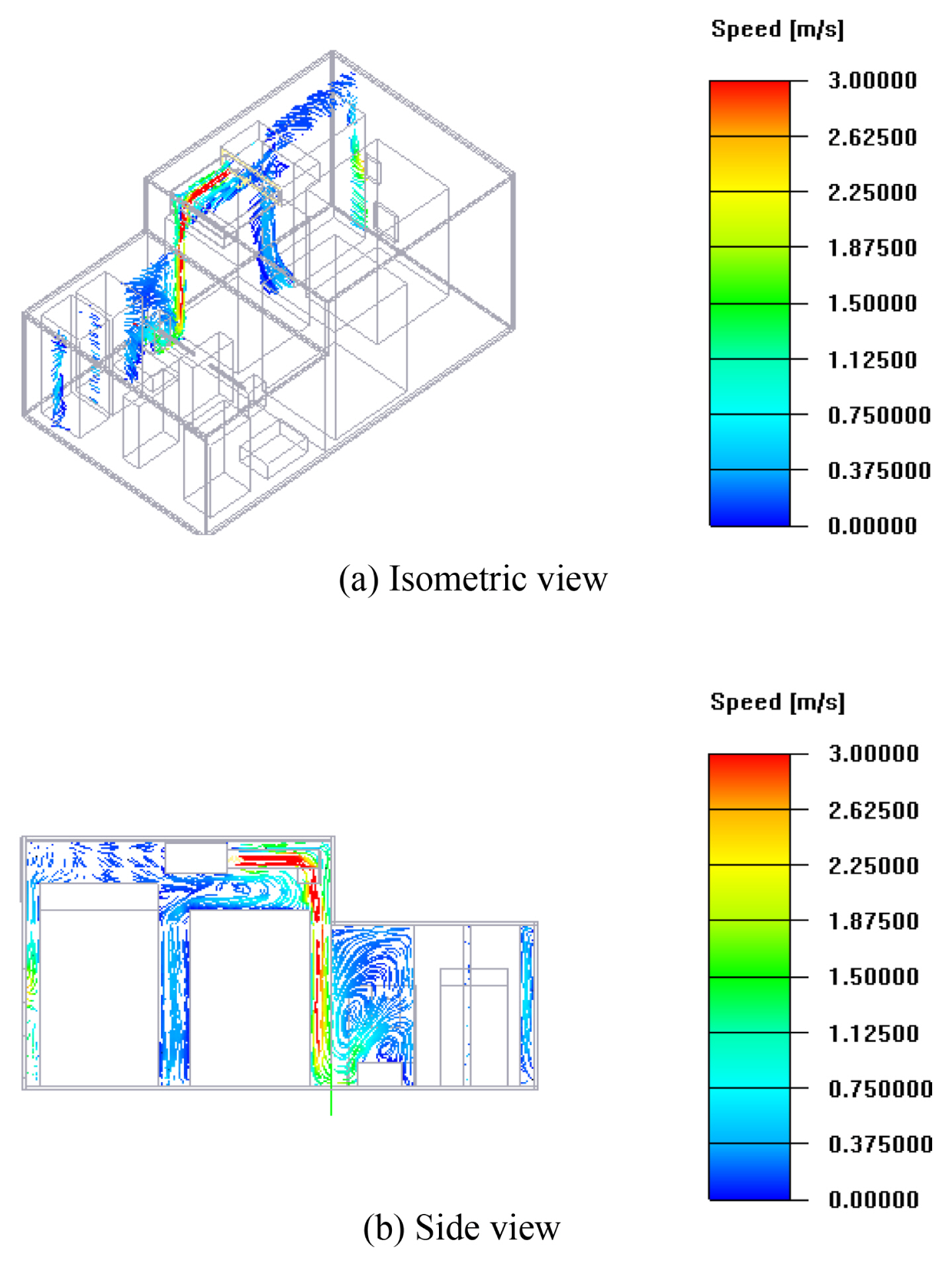
Fig. 10Temperature sensor location in shelter
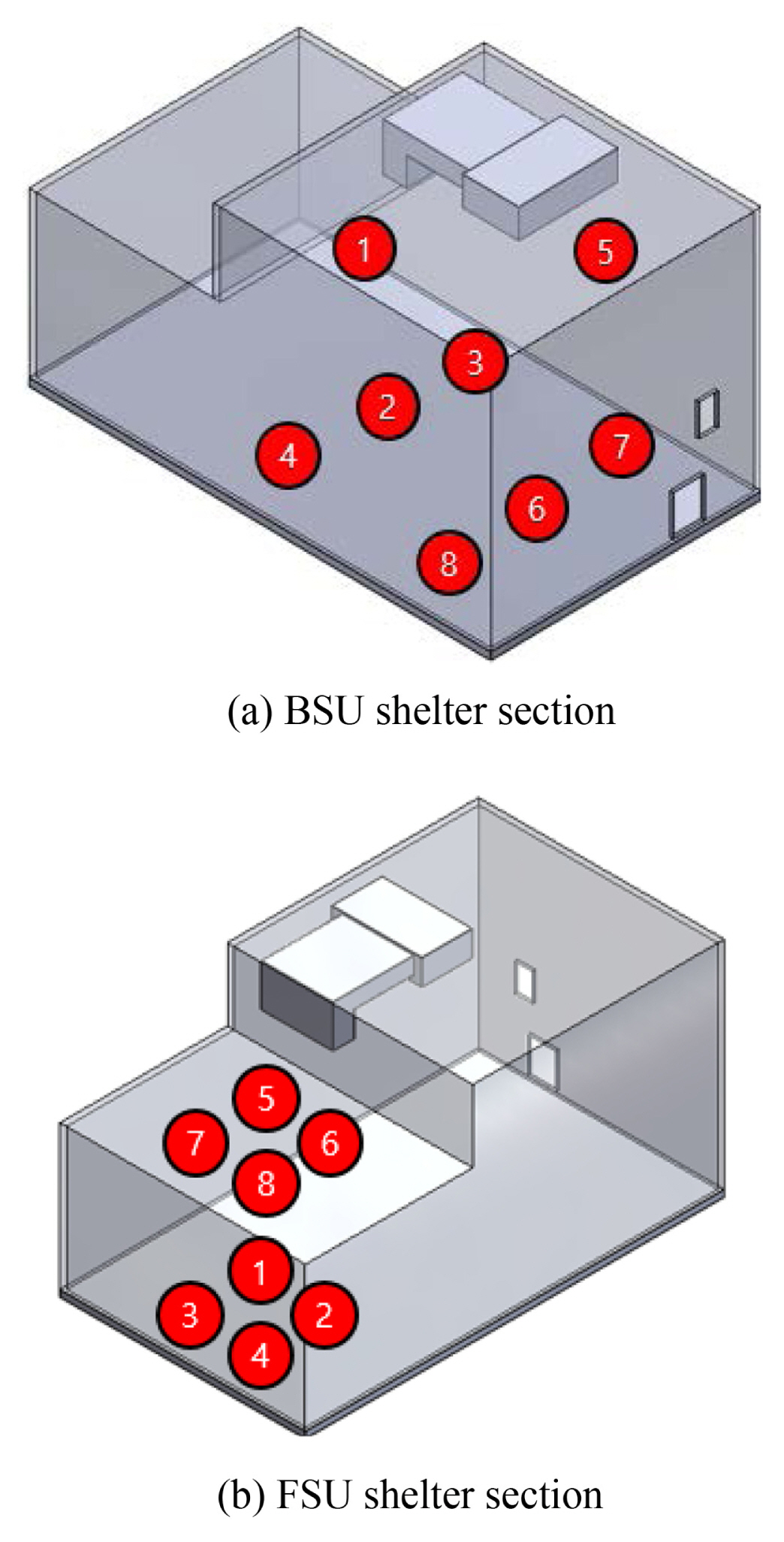
Fig. 11Experiment result of shelter temperature
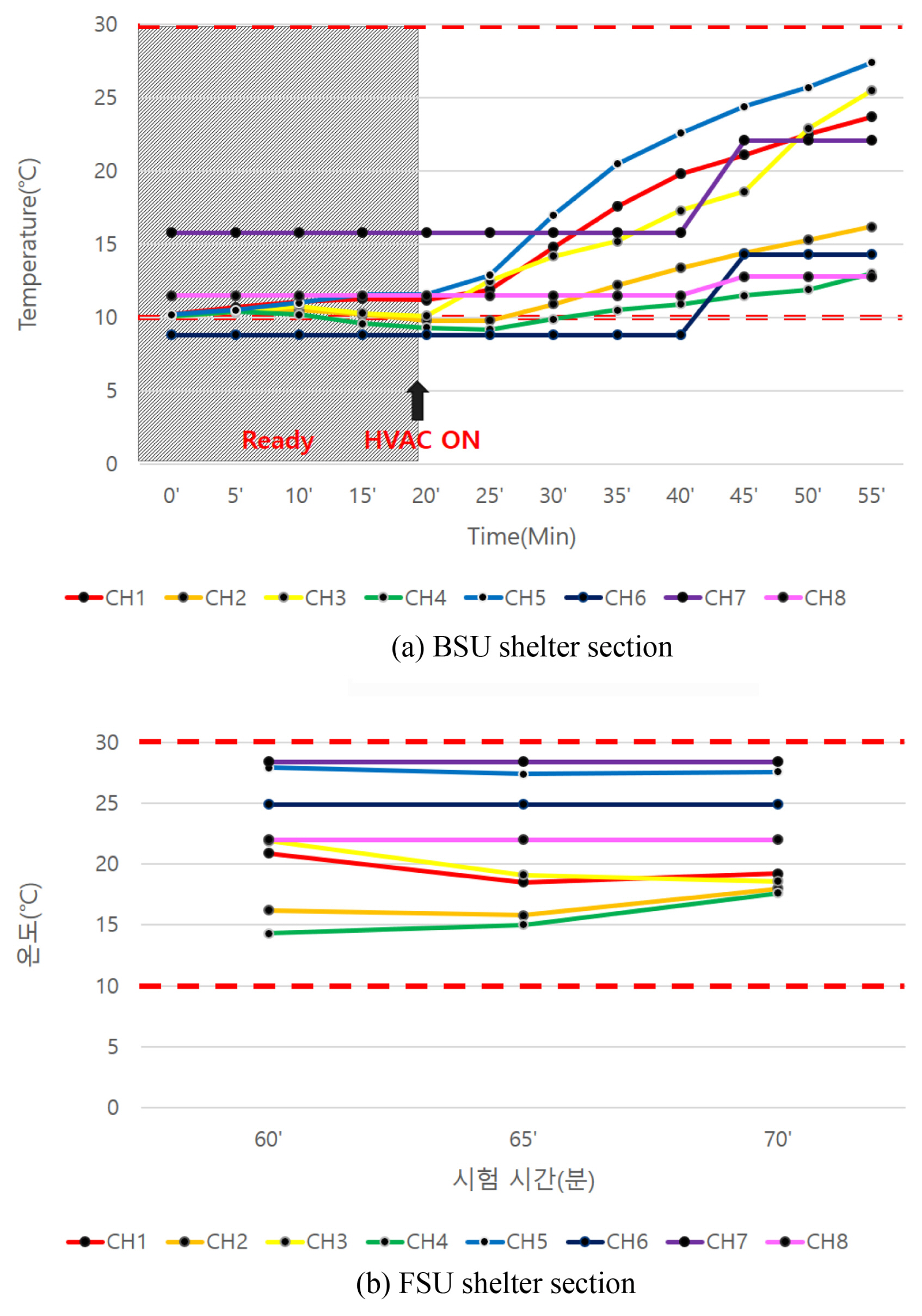
Table 1The dimensions of military shelter
Table 1
|
Dimensions (W X L X H, mm) |
3,400 × 6,500 × 3,000 |
Table 2
Table 2
|
Simulation tool |
ANSYS ICEPAK |
|
Time variation |
Steady |
|
Flow regime |
Laminar |
|
Ambient condition |
45° (No radiation) |
Table 3Material properties of shelter
Table 3
|
Material |
Density [kg/m3] |
Specific heat [J/(kg·K)] |
Thermal conductivity [W/(m·K)] |
Remarks |
|
Urethane |
48 |
1,200 |
0.023 |
Insulation panel |
|
AL5052 |
2,680 |
880 |
138 |
Outer/Inner skin |
Table 4
Table 4
|
Dimensions (W X L X H, mm) |
1,250 × 700 × 360 |
Table 5Boundary condition of HVAC
Table 5
|
Cooling capacity [kW] |
Outlet temperature [°C] |
Flow rate [m3/min] |
Flow velocity [m/s] |
|
14.5 |
11.95 |
40 |
3.1 |
Table 6The dimensions of air duct
Table 6
|
Dimensions (W X L X H, mm) |
1,200 × 1,000 × 430 |
Table 7Equipment heat generation value
Table 7
|
Equipment |
Heat generation [kW] |
|
Source #1 |
1.12 |
|
Source #2 |
0.6 |
|
Source #3 |
0.65 |
|
Source #4 |
0.28 |
|
Source #5 |
2.01 |
|
Source #6 |
0.3 |
|
Source #7 |
1.14 |
|
Rack #1 |
0.1 |
|
Rack #2 |
0.1 |
Cable
Total |
0.64
6.94 |
Table 8Result of average temperature in shelter
Table 8
|
Temp Avg[°C] |
Case #1 |
Case #2 |
|
Shelter section |
|
FSU |
43.5 |
33.0 |
|
BSU |
25.4 |
23.8 |
|
Total shelter |
32.1 |
27.2 |
REFERENCES
- 1. Shim, D.-H., Noh, K.-H., Park, J.-Y., Lim, Y.-T., (2018), A study on heat-transfer characteristics the shelter by solar-heat radiant, Journal of the Korea Society for Simulation, 27(2), 25-33.
- 2. Kim, Y.-H., Lee, J-H, Lee, K.-M., Jeong, E.-B., Yoon, J.-R., (2024), Development and validation of thermal analysis model for environmental test of shelter operation, Journal of the Korea Society for Fluid Machinery, 284-285.
- 3. Kang, I.-H., Lee, S.-H., (2024), Numerical analysis of orthotropic thermal conductivity in composite panels for shelter, Journal of the Korea Society of Mechanical Engineers, 516.
- 4. Kim, S., Lee, C., (2019), Analysis of temperature variation by structural arrangement of internal heat sources in radar shelters, Journal of the Korean Society for Precision Engineering, 36(2), 115-119.
Biography
- Young Seob Kim
M.S. Research Engineer, Mechanical Engineering systems R&D, LIG Nex1. His research interest is precision engineering.
- Yeong Chan Kwak
M.S. Research Engineer, Mechanical Engineering systems R&D, LIG Nex1. His research interest is precision engineering.
- Jin Young Jung
B.S. Research Engineer, Mechanical Engineering systems R&D, LIG Nex1. His research interest is precision engineering.
- Yeong Eun Ra
M.S. Research Engineer, Mechanical Engineering systems R&D, LIG Nex1. His research interest is precision engineering.